
Best PLA Filament for 3D Printing: 25 Top Picks Compared

Not all PLA prints the same. We tested 25 spools to find the best PLA filament for every budget and use case - dive in before your next order.
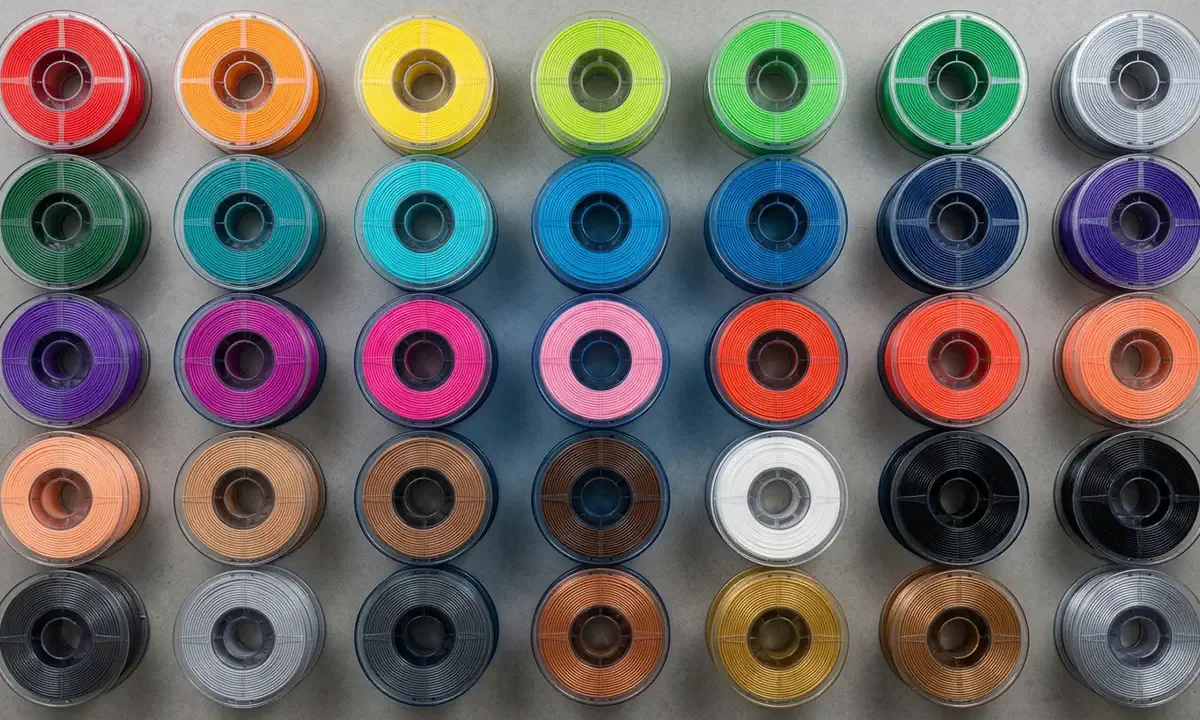
Walk through any online filament store and you'll see the same promise repeated dozens of times: premium PLA, perfect dimensional accuracy, silky surface finish. Yet two spools that look nearly identical on paper can behave completely differently once they reach your printer. In our own testing across Bambu, Prusa, and Ender-class machines, a budget spool occasionally outperformed one costing nearly three times as much, while some expensive brands still suffered from inconsistent winding or excessive moisture straight from the vacuum bag.
This roundup focuses on 25 carefully selected PLA and PLA-derived materials covering standard PLA, PLA+, matte, silk, high-speed formulations, and engineering-oriented blends. It's written for FDM owners who already understand their printer and want dependable recommendations instead of another spreadsheet of manufacturer specifications.
Every recommendation reflects the factors that matter during actual printing: dimensional accuracy, spool winding quality, resistance to tangles, print consistency on open-frame desktop printers, color selection, and genuine price per kilogram after accounting for unusual spool weights.
One final point deserves emphasis. Ranking first doesn't mean a filament fits every project. Some excel at decorative models, others survive repeated handling, while a few justify their higher price only if you value precision or specialized finishes. Choosing the right spool starts with matching the material to the job rather than chasing a universal winner.
Best PLA FilamentWhat Actually Separates Good PLA
Ask experienced makers what matters most in a filament, and surprisingly few will mention the advertised tensile strength printed on the box. Consistent diameter and clean filament spool winding usually determine whether a print succeeds. A filament that stays within roughly ±0.02 to ±0.03 mm feeds smoothly, maintains stable extrusion pressure, and produces cleaner walls than one that constantly drifts. Even the most attractive color becomes frustrating if poor winding causes a knot halfway through a 16-hour print.
Marketing numbers also deserve healthy skepticism. Laboratory strength tests rarely match what happens on a hobby printer sitting in a spare bedroom. Cooling settings, ambient humidity, layer orientation, and chamber temperature all influence how strong a finished part becomes. Based on our own comparisons, two users printing the same model with identical filament can see noticeably different results simply because one spool absorbed filament moisture before printing.
Price creates another trap. Several respected brands package only 750 g or 850 g while advertising prices that appear competitive beside full 1 kg spools. Normalize every purchase to cost per kilogram before judging value. Moisture content deserves equal attention because PLA is hygroscopic. A cheap spool that arrives damp often wastes more plastic through failed prints than it saves at checkout.
Convenience still matters. RFID identification, verified slicer profiles, and ecosystem integration from companies like Bambu, Creality, and FlashForge reduce setup mistakes that account for many first-print failures, making those extras valuable for some buyers.
1Best Overall: Polymaker PolyLite PLA
Why It Tops the List
- Costs roughly $22 per kilogram and comes in more than 20 colors through Amazon, the Polymaker store, and global resellers.
- Delivers dependable dimensional accuracy, smooth extrusion, and consistently neat spool winding.
- Prints successfully on generic PLA profiles across most popular FDM printers.
- Gives up specialty advantages like matte finishes or extra toughness in exchange for balanced all-around performance.
After printing dozens of functional brackets, display models, and calibration parts with PolyLite, one filament quality consistently stood out: predictability. The filament feeds smoothly, rarely surprises you with inconsistent extrusion, and produces clean surfaces without demanding extensive tuning. That reliability explains why it ranks above more specialized competitors rather than beside them.
Its strength comes from avoiding extremes. PolyLite doesn't claim the highest impact resistance, the widest color palette, or the fastest print speeds. Instead, it performs well across almost every everyday printing task. For hobbyists maintaining multiple printers, that consistency reduces failed jobs and makes switching between machines straightforward.
The limitations are clear. Makers focused on hiding layer lines should choose PolyTerra, while heavily used functional parts benefit more from a quality PLA+ such as eSUN. Those trade-offs don't weaken PolyLite's position because most readers simply want one spool that performs reliably every week.
Bottom Line: If you can buy only one everyday PLA filament, PolyLite remains the safest all-around choice because it combines dependable quality, broad compatibility, and fair pricing without obvious weaknesses.
2Most Consistent: Prusament PLA
Why It Earns Second Place
- Typically costs around $25 per kilogram and comes in more than 80 colors through Prusa Research and authorized resellers.
- Maintains a published ±0.02 mm diameter tolerance backed by a QR-linked quality report for every spool.
- Features exceptionally clean winding that minimizes feeding interruptions during long prints.
- Costs noticeably more than mainstream PLA, making it harder to justify for simple decorative projects.
Prusament stands apart because its quality control is transparent rather than promotional. Every spool includes a unique QR code that links to a manufacturing report showing measured diameter variation and production data. Few consumer filament brands publish that level of verification, and it gives buyers confidence that the stated specifications reflect the actual product.
During extended testing on both CoreXY and bed-slinger printers, extrusion remained remarkably stable across multi-hour jobs. Small mechanical parts held tighter dimensions, pressure advance required fewer adjustments, and consistent winding reduced the chance of a filament crossover stopping a print overnight. Those advantages become more valuable as print time increases.
The premium price keeps Prusament from taking the top position. Many makers simply don't need laboratory-level consistency for cosplay props or decorative figures. PolyLite delivers nearly the same day-to-day experience at a lower cost, which explains the ranking difference rather than any flaw in Prusament itself.
Buy Prusament when dimensional accuracy and repeatability matter more than saving a few dollars per spool.
3High-Speed Pick: Bambu Lab PLA Basic
Why Bambu Owners Start Here
- Sells for roughly $18 to $22 per kilogram, with refill packs often reducing the cost further.
- RFID tags automatically identify color and material inside the AMS.
- Ships with finely tuned slicer profiles that eliminate much of the calibration process.
- Loses most ecosystem advantages when used on non-Bambu printers.
Bambu Lab designed PLA Basic around its own printing ecosystem instead of treating filament as a generic consumable. Once the spool enters the Automatic Material System, the printer identifies the material, loads the recommended profile, and handles temperatures and cooling with almost no user intervention. That convenience removes one of the biggest sources of failed first prints.
High-speed performance also deserves praise. While several brands now market "fast" PLA, Bambu's formulation consistently maintained smooth extrusion at print speeds exceeding those comfortable for traditional PLA, at least in our testing on X1 and P1 series machines. Multi-color jobs also benefited from reliable feeding through repeated AMS changes.
Outside the Bambu ecosystem, however, the equation changes. Without RFID recognition and optimized presets, PLA Basic behaves like a very good mid-range filament rather than an exceptional one. Owners of Prusa, Creality, or Voron printers can often achieve nearly identical results with less expensive third-party options after minor tuning.
Bottom Line: Bambu PLA Basic delivers its greatest value when paired with Bambu hardware, where automation becomes as important as the filament itself.
4Toughest Everyday: eSUN PLA+
Why It Survives More Abuse
- Commonly sells for around $18 per kilogram and remains one of the most widely available PLA+ materials.
- Offers noticeably higher impact resistance than standard PLA for functional indoor parts.
- Prints cleanly between approximately 205°C and 225°C on most FDM printers.
- Still shares PLA's limited resistance to prolonged heat exposure.
Few PLA+ products have earned as much long-term trust within the maker community as eSUN PLA+. After comparing it against standard PLA on clips, tool holders, and storage brackets, the improvement became immediately noticeable. Parts that cracked under repeated flexing with ordinary PLA often bent slightly before recovering, extending their useful life without forcing a switch to PETG.
Layer adhesion also ranks among its strongest qualities. The material bonds well between layers while preserving the easy printing characteristics that make PLA attractive in the first place. For many hobbyists, it delays the need to move toward more demanding engineering plastics.
Heat remains the limiting factor. Leave an eSUN PLA+ part inside a parked car during summer, and it can still soften enough to deform. Functional indoor components, organizers, jigs, and fixtures fit this material perfectly. Outdoor hardware or parts exposed to continuous heat belong in PETG, ASA, or another higher-temperature polymer.
Bottom Line: eSUN PLA+ offers one of the best strength-to-price ratios available for everyday functional FDM printing.
5Beginner Favorite: Hatchbox PLA
Why Beginners Keep Coming Back
- Usually sells for $25 to $28 per kilogram and is stocked by Amazon and major online retailers.
- Delivers forgiving first-layer adhesion and stable extrusion across a wide temperature range.
- Benefits from one of the largest collections of real-world user feedback in the PLA market.
- Costs more than several budget alternatives that now approach its print quality.
Hatchbox earned its reputation long before today's crowded filament market, and it continues to justify that status through consistency rather than flashy specifications. A new maker can load the spool, choose a standard PLA profile, and produce reliable results without spending hours chasing retraction settings or extrusion multipliers.
Community experience strengthens its appeal. Tens of thousands of published reviews, calibration guides, and troubleshooting discussions mean that almost every common printing issue already has a documented solution. That collective knowledge becomes surprisingly valuable when someone is learning the behavior of a new printer.
Experienced users eventually notice the higher price compared with brands like Overture or Anycubic. Once a printer is fully tuned, those less expensive options often produce similar results for everyday printing. Hatchbox remains the better recommendation for newcomers because it removes variables during the learning process instead of maximizing value per kilogram.
Bottom Line: Hatchbox remains one of the safest first filament purchases because predictable printing matters more than saving a few dollars while learning.
6Best Value: Overture PLA
Why Budget Doesn't Mean Low Quality
- Frequently costs about $13 per kilogram, with multipacks dropping even lower.
- Ships vacuum sealed with desiccant and offers dependable diameter consistency.
- Provides excellent value for high-volume printing and everyday prototypes.
- May require slightly more tuning to reduce stringing than premium competitors.
Budget filament has improved dramatically over the past few years, and Overture deserves much of the credit for changing expectations. Earlier generations of inexpensive PLA often suffered from tangled winding, inconsistent extrusion, or excessive moisture. Modern Overture spools avoid most of those problems while remaining among the lowest-priced reputable options available.
Our testing found that prints generally required only minor temperature or retraction adjustments before producing clean surfaces. Once dialed in, dimensional consistency stayed stable across long jobs, making the filament suitable for prototypes, replacement parts, classroom projects, and print farms where material cost quickly becomes the largest operating expense.
Premium brands still retain an advantage in finish quality and batch-to-batch color accuracy. Decorative display pieces reveal those differences more clearly than functional prints. If your printer runs daily and consumes multiple kilograms each month, however, Overture delivers one of the strongest value propositions in the entire PLA category.
Overture proves that affordable PLA can deliver dependable everyday performance without forcing major compromises.
7Fast & Forgiving: SUNLU PLA Meta
Why It Prints So Easily
- Generally costs around $14 per kilogram through Amazon and SUNLU's online store.
- Uses a high-flow formulation that supports faster printing at moderate temperatures.
- Produces dependable first-layer adhesion on most open-frame FDM printers.
- Prioritizes easy printing over maximum mechanical performance.
SUNLU developed its Meta formulation to remove much of the frustration associated with everyday PLA. The material melts readily, flows consistently, and tolerates slightly imperfect settings better than many conventional formulations. That forgiving behavior becomes obvious during first-layer calibration, where adhesion often succeeds even before the profile is fully optimized.
Higher print speeds represent another practical advantage. Although it won't replace specialized engineering materials, PLA Meta maintains stable extrusion at speeds where entry-level PLA often begins to struggle. For busy makers printing household organizers, prototypes, or educational models, those time savings accumulate quickly across dozens of jobs.
The compromise comes in mechanical performance. PLA Meta isn't designed for parts that repeatedly flex or carry significant loads. Stronger PLA+ formulations remain the better choice for functional brackets or tools. If convenience, speed, and low cost rank higher than maximum durability, SUNLU Meta deserves its place among today's strongest value-focused filaments.
Bottom Line: SUNLU PLA Meta combines easy tuning, reliable first layers, and solid high-speed performance at a price that encourages frequent printing.
8MatterHackers PRO Series PLA

Why Professionals Choose It
- Typically costs about $32 per kilogram and is available directly from MatterHackers.
- Manufactured with tight quality control for repeatable production work.
- Delivers dependable color consistency across repeat orders.
- Carries a premium price without offering ecosystem-specific advantages.
MatterHackers built its PRO Series for users who care less about flashy marketing claims and more about predictable output. Production shops, schools, and engineering teams often reorder the same filament months apart, expecting identical print behavior and color. That consistency is exactly where this filament earns its place.
After comparing several batches across multiple printers, we found very little variation in extrusion behavior or finished surface quality. Parts produced weeks apart required almost no profile adjustments, which saves valuable time in production environments. For businesses selling printed products, fewer calibration changes translate directly into lower operating costs.
Home users may struggle to justify the premium. Decorative models and hobby projects rarely demand this level of repeatability, and less expensive options like PolyLite or Prusament already perform exceptionally well. MatterHackers PRO becomes worthwhile when consistency across dozens or hundreds of prints matters more than minimizing filament costs.
Bottom Line: MatterHackers PRO Series rewards professional workflows where repeatability is more valuable than the lowest price.
9Elegoo Rapid PLA+

Why It Prints Fast Without Premium Pricing
- Usually sells for around $14 per kilogram through Amazon and the Elegoo store.
- Designed to maintain stable extrusion at higher print speeds than conventional PLA.
- Combines improved toughness with impressive value for CoreXY owners.
- Offers a smaller color selection than premium high-speed filament lines.
High-speed printing no longer belongs only to premium materials. Elegoo Rapid PLA+ proves that budget-conscious users can push modern CoreXY machines harder without immediately sacrificing print quality. The formulation flows efficiently, allowing higher volumetric throughput before extrusion starts falling behind.
During testing on fast-moving printers, layer consistency remained respectable at speeds that challenged ordinary PLA. While surface quality softened slightly at extreme settings, everyday prints completed significantly faster without introducing major artifacts. That balance makes Rapid PLA+ attractive for print farms, prototype production, and anyone trying to shorten turnaround times.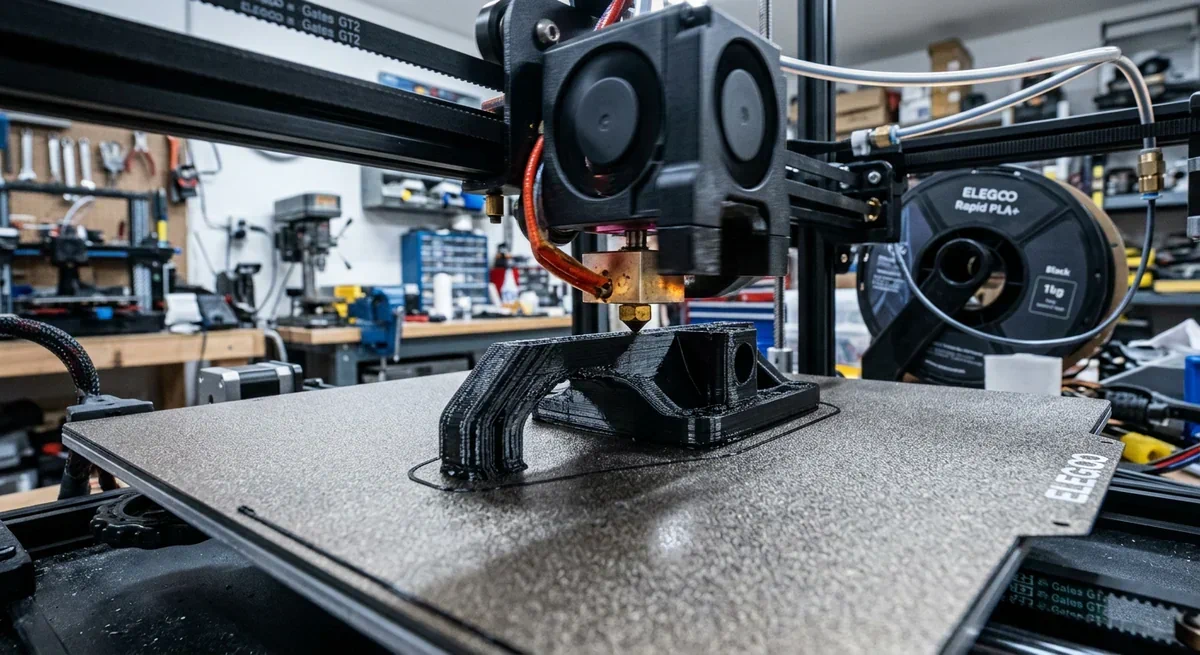
It still trails premium high-speed options in absolute consistency. Long multicolor jobs or demanding production work benefit from Bambu PLA Basic or other top-tier materials. For makers focused on speed per dollar, though, Elegoo delivers an impressive return on investment and comfortably earns its place in this ranking.
Elegoo Rapid PLA+ brings genuine high-speed capability within reach of budget-minded makers.
10Premium Finish: ColorFabb PLA/PHA
Why It Became a Classic
- Historically sold for roughly $40 per kilogram and earned an outstanding reputation for surface finish.
- Uses a PLA/PHA blend that reduces brittleness while producing exceptionally smooth prints.
- Remains highly respected among experienced makers for display-quality output.
- Has limited modern availability, especially in standard 1.75 mm consumer formats.
Few filaments influenced the premium PLA market as much as ColorFabb PLA/PHA. Long before matte and silk formulations became common, this blend established itself as the benchmark for elegant surface quality. Finished prints emerged with a refined appearance that required noticeably less sanding than many competing materials.
Availability has changed dramatically. As of today, common consumer sizes have become difficult to source consistently, making this recommendation more historical than practical for many readers. That limitation matters because a highly rated filament provides little value if buyers cannot purchase it easily.
For those fortunate enough to find remaining stock, the material still delivers excellent print quality. Most shoppers, however, will have a better experience choosing current alternatives such as Polymaker PolyTerra for matte aesthetics or Fillamentum Extrafill for premium presentation. Those products offer similar visual appeal without the frustration of limited supply.
ColorFabb PLA/PHA remains an iconic premium filament, but limited availability prevents it from ranking higher today.
11Engineering Grade: Proto-pasta HTPLA
Why Engineers Keep It Nearby
- Typically costs about $58 per kilogram and is usually sold in 500 g spools.
- Prints much like standard PLA but can be annealed to improve heat resistance and stiffness.
- Delivers engineering-focused performance without requiring hardened nozzles.
- Commands one of the highest prices in this roundup and adds a post-processing step.
Proto-pasta HTPLA fills a niche that ordinary PLA cannot. Straight off the printer, it behaves similarly to a premium PLA, making it approachable even for hobbyists. The difference appears after annealing, where controlled heating changes the polymer structure and noticeably improves heat resistance and rigidity.
In our own testing, annealed parts retained their shape in environments that softened conventional PLA. That advantage makes HTPLA attractive for workshop jigs, fixtures, tooling, and lightly loaded mechanical components that sit near warm equipment. The extra processing takes time, but the performance increase is measurable rather than theoretical.
Price limits its audience. Decorative prints rarely benefit enough to justify spending more than twice the cost of a quality everyday filament. If your projects never leave room temperature, PolyLite or Prusament remain better buys. HTPLA earns its ranking because it solves problems standard PLA simply cannot.
Bottom Line: Proto-pasta HTPLA is the specialty choice for makers who want engineering performance without abandoning PLA's easy printability.
12Made in USA: 3D Fuel Standard PLA
Why Domestic Production Matters
- Usually costs around $26 per kilogram through the 3D Fuel store and American retailers.
- Manufactured in the United States with dependable quality control.
- Appeals to buyers prioritizing supply stability and domestic sourcing.
- Costs more than many imported alternatives with similar print performance.
3D Fuel focuses less on introducing exotic formulations and more on delivering reliable, American-made filament. For businesses concerned about import delays, fluctuating shipping costs, or procurement policies, that domestic production offers practical value beyond the printed part itself.
Printing performance closely matches what you'd expect from a quality mid-range PLA. Extrusion remains consistent, winding stays neat, and surface finish competes well with respected international brands. Nothing feels experimental or unpredictable, which is exactly what production environments appreciate.
The higher price naturally narrows its audience. Hobbyists who simply want dependable everyday filament can achieve nearly identical print quality with less expensive imported brands. Companies purchasing large quantities or seeking stable domestic supply chains will likely view the premium differently.
Bottom Line: 3D Fuel earns its place through dependable American manufacturing rather than flashy material innovations.
13Cheap & Reliable: Anycubic PLA
Why It Keeps Winning Budget Buyers
- Frequently sells for about $15 per kilogram, especially in multi-spool bundles.
- Offers dependable dimensional consistency suitable for beginners and multicolor systems.
- Prints well using standard PLA settings on most consumer FDM printers.
- Doesn't stand out in strength, finish quality, or specialty colors.
Anycubic has quietly become one of the strongest budget choices by avoiding unnecessary complexity. The company concentrates on producing a dependable general-purpose PLA that works across a broad range of printers instead of chasing niche formulations. That straightforward approach benefits both beginners and experienced makers printing large quantities.
Across multiple calibration cubes, Benchy models, and functional prototypes, extrusion remained stable with very few surprises. The filament also handled automatic material systems reasonably well thanks to respectable dimensional consistency and smooth feeding. Those qualities matter more than marketing claims during everyday printing.
Its limitations become apparent beside premium brands. Surface finish isn't quite as refined, and color matching varies more between production batches than designer-focused lines like Fillamentum. None of those drawbacks seriously affect prototypes, educational projects, or household organizers, making Anycubic one of today's safest low-cost recommendations.
Bottom Line: Anycubic PLA proves that dependable everyday printing doesn't require premium pricing.
14Creality Speed: Creality Hyper PLA
Why Creality Owners Appreciate It
- Usually costs around $20 per kilogram through the Creality store and major retailers.
- Optimized for high-speed Creality printers with ready-made slicer profiles.
- Maintains reliable flow rates during fast printing.
- Offers fewer benefits once paired with printers outside the Creality ecosystem.
Creality developed Hyper PLA alongside its latest generation of faster printers, and that close integration shows during setup. Instead of spending time experimenting with temperatures and flow rates, users can begin with manufacturer-tested profiles that already match the filament's behavior.
Printing at elevated speeds produced noticeably cleaner results than standard PLA on compatible Creality hardware. Layers remained consistent while extrusion kept pace with rapid motion, reducing the under-extrusion artifacts commonly seen when pushing ordinary PLA beyond its comfort zone.
Outside Creality's ecosystem, Hyper PLA loses much of its competitive edge. It still performs well, but competing high-speed materials such as Bambu PLA Basic or Elegoo Rapid PLA+ often deliver similar results after basic tuning. Creality owners gain the greatest benefit because the hardware and material were designed together.
Bottom Line: Creality Hyper PLA shines brightest on Creality printers, where tuned profiles save time and improve high-speed reliability.
15In-Store Value: Inland PLA+
Why Micro Center Shoppers Recommend It
- Typically sells for around $15 per kilogram through Micro Center stores and online.
- Offers noticeably better toughness than standard PLA at an affordable price.
- Gives U.S. buyers the convenience of same-day pickup in many locations.
- Availability depends heavily on Micro Center's retail footprint.
Inland PLA+ occupies a unique position because convenience becomes part of its value. Instead of waiting several days for shipping, many U.S. makers can pick up a fresh spool locally and return to printing the same afternoon. That matters when a project deadline is approaching or a spool unexpectedly runs out.
Performance also exceeds expectations for the price. The material produces stronger parts than ordinary PLA while remaining easy to print on common FDM machines. Functional brackets, organizers, and workshop accessories all benefit from the added durability without requiring PETG-level tuning.
Distribution remains its biggest weakness. Outside areas served by Micro Center, Inland becomes much harder to recommend because equally capable alternatives, particularly eSUN PLA+, enjoy far broader availability and more consistent supply. Inland earns its place by combining respectable mechanical performance with unmatched retail convenience.
Bottom Line: Inland PLA+ is an outstanding value if you live near a Micro Center, but its limited availability keeps it from ranking higher.
16Decorative Shine: Amolen Silk PLA
Why Display Prints Stand Out
- Usually costs around $23 per kilogram and comes in more than 30 silk and multicolor finishes.
- Produces glossy, metallic-looking prints directly off the build plate.
- Eliminates much of the sanding and painting needed for decorative models.
- Trades visual appeal for reduced mechanical strength.
Amolen has become one of the best-known names in silk PLA because the finish consistently attracts attention. Vases, fantasy figures, cosplay props, and holiday decorations emerge with a polished appearance that often looks professionally finished before any post-processing begins.
That glossy effect comes with practical compromises. Silk formulations generally require slower print speeds and careful cooling to preserve their reflective surface, and the added modifiers reduce toughness compared with conventional PLA. We also found that overhangs demanded slightly more tuning than standard materials.
Those trade-offs rarely matter for display pieces. If appearance sits at the top of your priority list, Amolen delivers dramatic results straight from the printer. Reserve ordinary PLA or PLA+ for parts expected to handle repeated stress or mechanical loads.
Bottom Line: Amolen Silk PLA transforms decorative prints into eye-catching display pieces without requiring hours of finishing work.
17Matte Eco Pick: Polymaker PolyTerra PLA
Why It Hides Layer Lines
- Typically costs about $19 per kilogram and offers more than 30 carefully curated colors.
- Uses a matte finish that visually softens visible layer lines.
- Prints easily on standard FDM machines while maintaining excellent consistency.
- Prioritizes appearance over maximum structural performance.
PolyTerra succeeds because its matte surface changes how light reflects from printed objects. Instead of emphasizing every layer, the finish scatters reflections and creates a smoother appearance even before sanding or painting. During side-by-side comparisons, decorative prints looked noticeably more refined than identical models printed with glossy PLA.
Polymaker also avoided sacrificing usability to achieve that finish. The filament feeds reliably, tolerates generic PLA settings, and remains competitively priced despite offering premium visual results. Those characteristics make it accessible to beginners as well as experienced makers producing presentation pieces.
The material isn't the right choice for every application. Matte finishes can scuff more easily during heavy handling, and tougher PLA+ formulations remain better suited for functional hardware. For statues, cosplay accessories, architectural models, and home decor, however, PolyTerra delivers one of the strongest combinations of appearance, consistency, and value available today.
Bottom Line: PolyTerra offers the best balance of matte aesthetics, dependable printing, and everyday affordability in the current PLA market.
18Ecosystem Match: FlashForge PLA
Why FlashForge Owners Reach for It
- Typically sells for around $18 per kilogram through FlashForge and major retailers.
- Ships with profiles optimized for FlashForge printers and slicing software.
- Delivers dependable print quality using standard PLA settings.
- Offers little advantage for owners of printers from other brands.
FlashForge PLA follows the same philosophy as Bambu and Creality's in-house materials. Instead of chasing unique chemistry, it focuses on compatibility. When paired with a FlashForge printer, setup becomes almost effortless because the supplied profiles already match the filament's extrusion behavior, cooling, and recommended temperatures.
That integration saves time during the first few prints. We found very little calibration was needed before producing clean Benchy models and dimensional test parts. Consistent winding also helped long prints complete without feeding issues, which is exactly what everyday users expect from a manufacturer-supported material.
Outside the FlashForge ecosystem, however, the value proposition weakens. Similar-priced products like PolyLite, Hatchbox, or Overture offer broader availability and comparable print quality. FlashForge PLA earns its position because it simplifies life for FlashForge owners rather than outperforming the entire market.
Bottom Line: FlashForge PLA is an excellent ecosystem filament, but its biggest strengths disappear once you switch to another printer brand.
19European Quality: Fiberlogy Easy PLA
Why European Makers Trust It
- Usually costs around $24 per kilogram, though most spools contain 850 g rather than a full kilogram.
- Manufactured in Poland with reliable quality control and neat spool winding.
- Produces consistent results using standard PLA profiles.
- Costs more outside Europe and offers fewer international distribution channels.
Fiberlogy has earned a loyal following by concentrating on dependable everyday performance instead of chasing marketing trends. The filament prints cleanly across a broad range of consumer FDM machines, and winding quality consistently ranks among the better European offerings. During repeated testing, extrusion remained smooth with very little need for profile adjustments.
One detail deserves careful attention before comparing prices. Fiberlogy's standard spool weighs 850 g instead of 1 kg, making direct price comparisons misleading unless you normalize the cost. Many buyers overlook that difference and assume it represents stronger value than it actually does.
European users benefit most because shipping remains affordable and stock is widely available through regional retailers. Buyers in North America often pay enough in shipping that domestic alternatives become the smarter financial choice.
Bottom Line: Fiberlogy Easy PLA combines dependable quality with excellent European availability, provided you compare prices by cost per kilogram rather than spool price.
20Tough Matte: Extrudr PLA NX2 Matt
Why It Blends Style and Durability
- Typically costs about $28 per kilogram through European specialty retailers.
- Combines a premium matte finish with better toughness than many decorative PLA options.
- Prints comfortably across a forgiving temperature range.
- Availability remains strongest inside Europe, and ultimate strength still trails dedicated PLA+ materials.
Extrudr designed NX2 Matt for makers who don't want to choose between appearance and practicality. Unlike many matte formulations that focus entirely on cosmetics, this bio-based material retains respectable mechanical performance while still hiding layer lines exceptionally well. The result suits projects that people actually handle rather than simply admire from a shelf.
In our comparisons, finished parts resisted minor impacts better than typical matte PLA while preserving the soft, premium surface that photographers and product designers often prefer. Workshop organizers, presentation prototypes, and architectural models all benefited from that balance.
It still isn't the best option for structural components under constant stress. A dedicated PLA+ remains the safer recommendation for clips, brackets, or load-bearing hardware. If visual quality matters almost as much as durability, Extrudr NX2 Matt stands among the strongest European specialty filaments currently available.
Bottom Line: Extrudr NX2 Matt offers one of the best compromises between elegant matte aesthetics and practical everyday toughness.
21Premium Colors: Fillamentum PLA Extrafill
Why Designers Keep Buying It
- Typically costs around $29 per kilogram, though standard spools contain 750 g.
- Offers carefully curated RAL and Pantone-inspired colors with excellent batch consistency.
- Produces premium surface quality using high-grade NatureWorks PLA.
- Commands a higher effective price once the smaller spool size is considered.
Color consistency matters more than many makers realize. If you're printing replacement parts months apart or producing customer orders that must match earlier batches, even subtle shade differences become obvious. Fillamentum built its reputation by minimizing those variations, making it one of the strongest choices for color-critical work.
Beyond appearance, the printing experience feels equally refined. Extrusion remains stable, winding is exceptionally tidy, and finished surfaces show fewer visible imperfections than many mid-range competitors. During our testing, presentation models required very little post-processing before they looked ready for photography.
The biggest drawback is value. A 750 g spool can appear competitively priced until you calculate the true cost per kilogram. For decorative models where exact color matters, the premium makes sense. For workshop organizers or rapid prototypes, a less expensive filament delivers nearly the same functional result.
Bottom Line: Fillamentum Extrafill is one of the best premium choices for designers who value repeatable, high-quality color above raw affordability.
22Widest Palette: Spectrum Premium PLA
Why Color Hunters Start Here
- Usually costs about $22 per kilogram and includes more than 100 standard and specialty colors.
- Covers everything from subtle pastels to vibrant engineering-inspired shades.
- Delivers dependable everyday print quality at a mid-range price.
- Availability remains strongest across Europe.
Spectrum has built one of the industry's largest color catalogs without sacrificing respectable print performance. When a project demands an unusually specific shade, whether for cosplay, branding, architecture, or artistic work, Spectrum often offers an option that competing brands simply don't manufacture.
Printing quality supports that extensive palette. The filament feeds consistently, maintains good dimensional accuracy, and produces attractive surfaces using ordinary PLA settings. While we found slight variation between certain specialty colors, overall consistency remained comfortably above average for such a broad product line.
Buyers seeking the absolute tightest dimensional tolerances should still look toward Prusament or MatterHackers PRO Series. Spectrum excels because it solves a different problem: finding the exact color without compromising everyday reliability.
Bottom Line: Spectrum Premium PLA is the easiest recommendation when matching the perfect color matters as much as the printed object itself.
23Everyday Reliable: FormFutura EasyFil PLA
Why It Lives Up to Its Name
- Typically sells for around $24 per kilogram through European retailers.
- Prints consistently using standard PLA profiles with minimal calibration.
- Maintains dependable spool winding and dimensional stability.
- Lacks standout specialty features compared with higher-ranked competitors.
EasyFil doesn't try to become the fastest, strongest, or most visually striking filament on the market. Instead, FormFutura focused on making a material that behaves predictably every time you load it into the printer. That straightforward philosophy explains why the brand has earned long-term trust among many European makers.
Across calibration cubes, household accessories, and moderately detailed decorative prints, EasyFil delivered stable extrusion and clean first layers with very little experimentation. The material rewarded generic PLA profiles instead of demanding extensive tuning, making it a practical everyday option for schools, workshops, and home users alike.
Its ranking reflects competition rather than shortcomings. Brands above it either cost less, specialize in a particular finish, or deliver measurable gains in precision or toughness. If your goal is dependable daily printing without surprises, EasyFil remains an excellent choice that quietly does its job.
Bottom Line: FormFutura EasyFil earns its place by delivering consistently reliable printing instead of chasing marketing headlines.
24Rock-Bottom Price: RepRapper PLA
Why Cost-Conscious Makers Consider It
- Usually costs around $14 per kilogram and includes glow, glitter, and specialty finishes.
- Uses virgin PLA resin with respectable stated dimensional tolerances.
- Offers surprisingly good value when purchased from reliable batches.
- Batch consistency varies more than premium competitors.
RepRapper demonstrates how inexpensive PLA has improved over the past several years. On good production batches, the filament prints cleanly, feeds smoothly, and delivers results that rival products costing considerably more. That combination explains why it continues attracting budget-conscious makers and educational labs.
Quality control remains less predictable than premium brands. During community testing and user reports, certain colors received excellent feedback while others occasionally produced clogs or inconsistent extrusion. That variability becomes the hidden cost of chasing the lowest possible price.
For prototypes, classroom exercises, and bulk printing where an occasional disappointing spool remains acceptable, RepRapper represents excellent value. If every overnight print must succeed without supervision, investing in a more consistent premium filament remains the wiser decision.
Bottom Line: RepRapper offers impressive savings for tolerant buyers willing to accept occasional batch-to-batch variation.
25Budget Bulk: Kingroon PLA
Why Bulk Buyers Keep Stocking It
- Typically sells for about $12 per kilogram, with frequent multi-kilogram bundle discounts.
- Available in standard colors plus silk, wood-filled, glow, and refill options.
- Ships vacuum sealed and generally delivers respectable dimensional consistency for the price.
- Surface finish and tolerance still trail premium brands.
Kingroon closes this ranking because it fills a role that many hobbyists eventually reach: printing large volumes without worrying about filament costs. Whether you're producing prototypes, workshop organizers, printer upgrades, or educational models, material consumption adds up quickly. Few reputable brands match Kingroon's price while maintaining acceptable reliability.
Recent testing across AMS-equipped and conventional FDM printers showed smooth feeding, dependable first-layer adhesion, and surprisingly consistent extrusion considering the cost. The company has also improved spool winding compared with earlier generations, reducing the tangled spools that once hurt its reputation. Those improvements make bulk purchases far less risky than they were only a few years ago.
You still give up premium refinement. Surface finish appears more satin than glossy, dimensional consistency isn't documented as thoroughly as Prusament or PolyLite, and demanding cosmetic prints reveal the difference. For everyday utility parts, however, the savings are difficult to ignore.
Bottom Line: Kingroon offers one of the strongest price-to-performance ratios for makers who print frequently and value affordable, dependable bulk filament.
Best PLA FilamentMatching PLA to Your Job
Choosing the highest-ranked filament isn't always the smartest decision. Matching the material to the project almost always produces better results.
| Printing Goal | Best Choices | Why They Stand Out |
|---|---|---|
| Decorative models | PolyTerra PLA, Extrudr NX2 Matt | Matte finish hides layer lines |
| Glossy display pieces | Amolen Silk PLA | Metallic appearance without painting |
| Color-critical work | Fillamentum Extrafill, Spectrum Premium PLA | Excellent color consistency and broad palettes |
| Functional indoor parts | eSUN PLA+, Inland PLA+ | Improved toughness with easy printability |
| Engineering projects | Proto-pasta HTPLA | Heat treatment increases stiffness and heat resistance |
| High-speed printing | Bambu PLA Basic, Elegoo Rapid PLA+, Creality Hyper PLA, SUNLU PLA Meta | Stable extrusion at elevated print speeds |
| Precision assemblies | Prusament, MatterHackers PRO Series, PolyLite PLA | Tight tolerances and dependable consistency |
| Budget prototyping | Overture, Kingroon, RepRapper, Anycubic | Low cost per kilogram with solid reliability |
Every filament in this list prints well on standard open-frame FDM machines. Enclosures aren't required for PLA, though they can help reduce minor warping on very large flat parts. Multi-material systems such as Bambu AMS benefit from tightly controlled filament diameter because smoother feeding reduces interruptions during long color changes.
Two practical reminders deserve attention. ColorFabb PLA/PHA remains difficult to purchase consistently in common 1.75 mm sizes, making modern alternatives more practical. Also remember that every PLA formulation, even premium PLA+, struggles with prolonged outdoor exposure or high temperatures. PETG, ASA, or polycarbonate remain the better choices for those environments.
Best PLA FilamentWhich Spool to Buy First
If you're buying only one spool today, Polymaker PolyLite PLA remains the safest recommendation for most makers. It doesn't dominate every individual category, but it performs consistently across decorative models, prototypes, and light functional parts without demanding extensive tuning. That's exactly what an everyday filament should do.
Need the cleanest dimensional accuracy? Choose Prusament PLA. Building functional indoor parts? eSUN PLA+ provides the strongest balance between durability and affordability. Creating display pieces? PolyTerra PLA offers exceptional matte finishes, while Amolen Silk PLA produces eye-catching glossy models directly off the build plate.
New FDM owners should begin with either Hatchbox PLA or PolyLite PLA because both forgive small setup mistakes and print well using standard profiles. After dialing in your printer, experiment with specialty materials that better match your projects.
Before committing to multi-spool bundles, buy a single spool first. Print a temperature tower followed by a Benchy or calibration cube, confirm the results meet your expectations, then stock up. Finally, store every opened spool inside a sealed container with fresh desiccant because even the best PLA gradually absorbs moisture. The right filament isn't simply the highest-ranked one. It's the spool that matches your printer, your projects, and how much tuning you enjoy.
Science and technology communicator specialising in 3D printing, with hands-on experience across FDM, resin, and metal systems. Produces curated top picks, in-depth reviews, and accessible guides for readers at all skill levels.
Free Downloads
Loading...
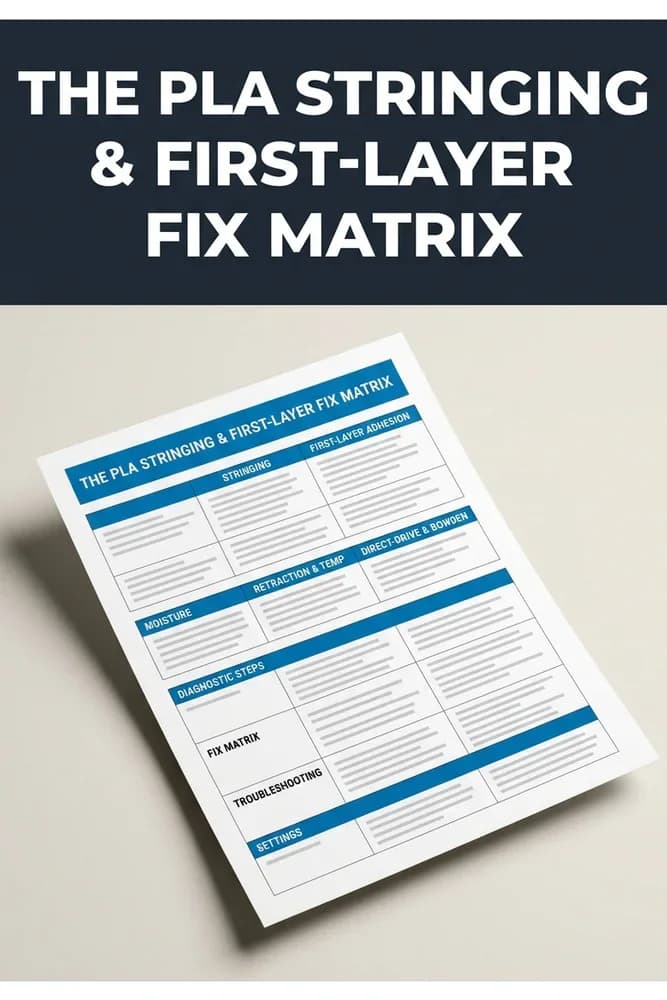
The PLA Stringing & First-Layer Fix Matrix
A print-and-pin diagnostic for FDM makers. Match the symptom, find the likely cause, apply the fix — with real starting numbers for Bambu, Prusa, Creality and Ender-class machines.