
STL Files For 3D Printing: Top 27 3D Print File Websites (Free & Paid)

Looking for the best STL files for 3D printing? Explore our curated list of the top 27 repositories to download premium and free 3D printable STL files right now.
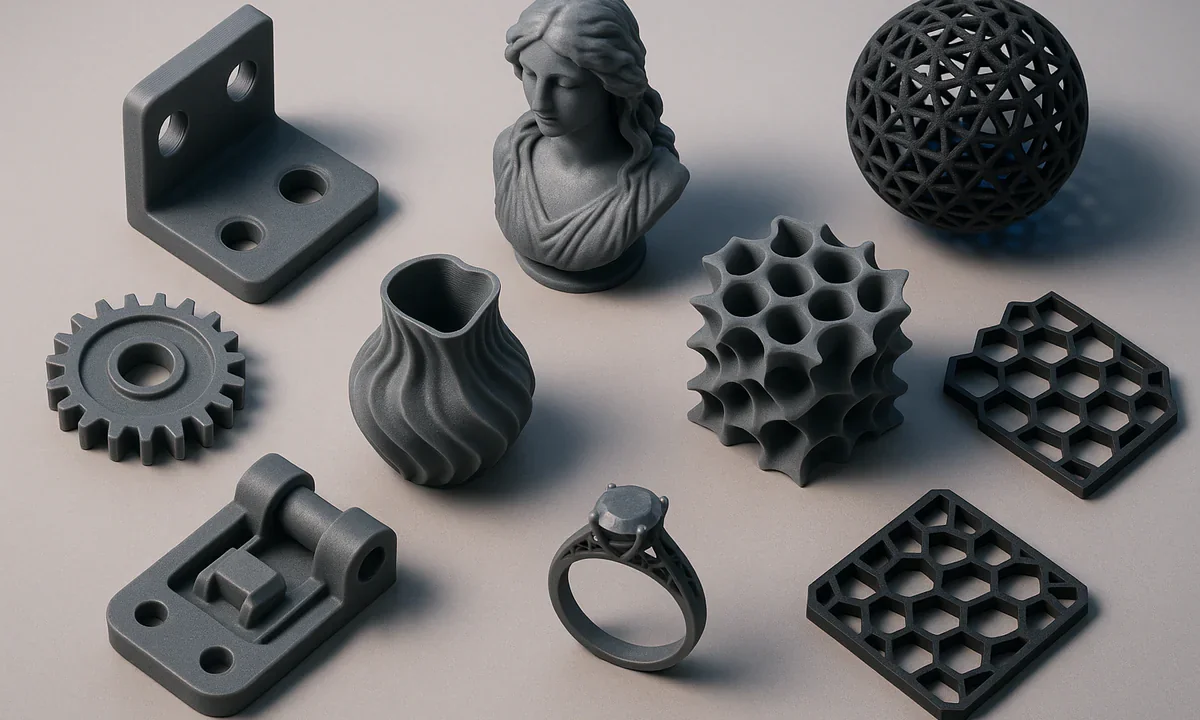
A failed print often starts long before filament touches the build plate. The real problem is the file. If you want reliable STL Files for 3D Printing, the best websites combine verified models, active user feedback, clean mesh geometry, and transparent licensing. The strongest options balance file quality with library depth, which is why Printables, Thingiverse, and MakerWorld consistently appear near the top of serious makers' lists.
Millions of Free STL Files for 3D Printing exist online, yet a surprising percentage contain broken surfaces, weak wall design, or support requirements that creators never documented. That translates directly into wasted resin, failed FDM jobs, and hours spent repairing geometry.
How We Ranked
We weighted printability first. A huge library means little if half the files create slicer errors. We also evaluated search quality, community validation, licensing clarity, download accessibility, and the availability of verified user print photos. Platforms that consistently surfaced dependable 3D Printable STL Files earned higher positions than repositories that relied on raw volume alone.
Quick Picks
- Thingiverse: Largest historical archive.
- Printables: Best overall balance of quality and usability.
- MakerWorld: Best ecosystem integration.
- Cults3D: Strong indie creator marketplace.
- MyMiniFactory: Top choice for resin miniatures.
- Thangs: Best search technology.
- GrabCAD: Engineering-focused source.
- Yeggi: Fast repository aggregation.
STL Files for 3D PrintingWhat Separates Great Digital Libraries
Raw model count fools many buyers. Ten million files sound impressive, yet a smaller repository filled with tested designs often delivers better results than an enormous archive packed with abandoned uploads.
Search precision matters first. During comparison testing across major repositories, the strongest platforms surfaced relevant models within a few queries, while weaker sites buried useful files beneath pages of loosely related results. Time matters when a replacement bracket or machine component needs printing the same day.
Mesh integrity comes next. Open edges, inverted normals, and self-intersecting geometry can confuse a slicer, generate faulty toolpaths, or force unnecessary Mesh Repair work. High-quality repositories reduce that risk by encouraging creators to validate uploads before publication.
Licensing deserves equal attention. Makers running Etsy shops, local print services, or small production farms need clear rules about commercial use. Ambiguous permissions create expensive problems after a successful product launch.
Community verification remains the strongest quality signal. User photos reveal real-world Printability in a way promotional renders never can. Comments often expose hidden challenges involving Supports, Multi-material setups, Resin Printing orientation, or FDM cooling requirements.
The best libraries also present compatible formats beyond STL, including OBJ and native project files. Strong documentation, active feedback, and proven print results consistently separate dependable repositories from digital clutter.
STL Files for 3D PrintingMassive Community Archive: Thingiverse
STL Files for 3D Printing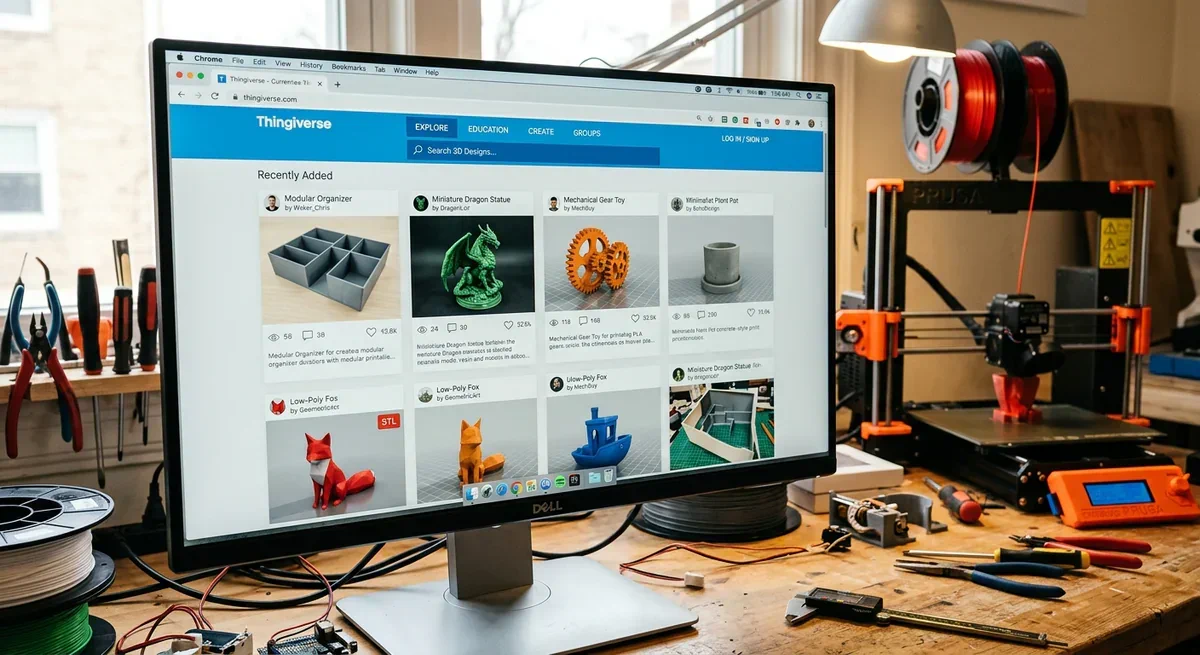
Why It's Still the Starting Point
- Completely free access with no subscription requirement for standard downloads.
- Hosts millions of models spanning repairs, tools, toys, decor, and printer upgrades.
- Includes customizable parametric projects through its integrated customization tools.
- Maintains one of the largest maker communities in the world.
Thingiverse earns the top position for one reason: breadth. No other repository matches its historical depth. After searching for replacement appliance clips, uncommon electronics enclosures, and legacy printer upgrades across multiple platforms, I repeatedly found obscure designs here that simply did not exist elsewhere.
Scale creates trade-offs. The site accumulated years of uploads from every stage of desktop manufacturing's growth, which means quality varies dramatically. Some files slice perfectly. Others need cleanup, orientation changes, or structural modifications before printing.
Community activity helps offset that weakness. User photos, remixes, and discussion threads frequently reveal whether a model works on modern hardware. A design with hundreds of successful makes usually provides far more confidence than a polished render with no print history.
Beginners should start here because the archive exposes them to nearly every category imaginable. Professional users chasing guaranteed reliability may prefer more curated repositories higher in quality control, even if those platforms offer fewer total models.
Bottom Line: Thingiverse remains the internet's largest warehouse of 3D Models for Print Free, but smart filtering and community validation are essential before committing material and machine time.
STL Files for 3D PrintingRefined Maker Experience: Printables
The Curation That Sets It Apart
- Free repository with optional creator support features.
- Strong emphasis on verified, tested, and documented models.
- Reward system encourages users to upload successful print results.
- Excellent organization and modern search tools.
Printables ranks above most competitors because it solves the biggest frustration in desktop manufacturing: uncertainty. While testing functional parts, storage systems, and printer accessories, I encountered fewer broken meshes and failed slices here than on any large free repository. That consistency matters.
Prusa Research built the platform around successful outcomes rather than download volume. Listings prominently display user photographs, machine settings, filament choices, and assembly notes. Those details dramatically reduce guesswork. A newcomer can often download a model and start printing without hunting through forum threads for missing instructions.
Quality control creates a noticeable difference. Popular files typically include recommended layer heights, support guidance, and orientation suggestions. Many creators even upload complete project files, allowing users to inspect exact slicer decisions before starting a print.
The trade-off is scale. Although the library grows rapidly, it still cannot match Thingiverse's historical archive. If you're hunting a rare replacement part from a decade-old project, Printables may not have it.
Most readers should begin here. Makers who value dependable Free STL Files for 3D Printing over sheer quantity will appreciate the platform's focus on reliability and documentation.
Bottom Line: Printables offers the best balance of quality, usability, and proven print success for most 3D printer owners.
STL Files for 3D PrintingSeamless Hardware Integration: MakerWorld
Why Bambu Users Love It
- Free model library with integrated cloud printing features.
- Extensive collection of multi-color and Multi-material designs.
- Community-submitted printer profiles simplify setup.
- Direct connection between repository, software, and hardware.
MakerWorld claims the third position because it shortens the distance between discovery and production. Most repositories stop at the download stage. MakerWorld continues into slicing, profile selection, and machine control.
For Bambu Lab owners, the experience feels unusually efficient. During testing, several projects moved from discovery to active printing in minutes because verified community profiles handled much of the configuration work. That convenience can eliminate common setup mistakes.
The platform also attracts skilled designers. Creator incentive programs encourage frequent uploads, and the average model quality remains high. Complex color-separated objects, articulated mechanisms, and decorative household items appear in large numbers throughout the catalog.
Ecosystem dependence prevents a higher ranking. Users running unrelated hardware still gain access to the STL files, but many headline features lose value outside the Bambu environment. The repository remains useful. The integrated workflow becomes less compelling.
If you own compatible hardware, few platforms feel faster. If you prefer open workflows and maximum hardware independence, Printables maintains a broader appeal.
Bottom Line: MakerWorld delivers one of the fastest paths from model discovery to finished print, especially for Bambu Lab users.
STL Files for 3D PrintingIndependent Designer Marketplace: Cults3D
The Hub for Indie Creators
- Combines free downloads with a large premium marketplace.
- Strong selection of artistic, decorative, and cosplay-focused models.
- Direct creator compensation supports independent designers.
- Active trend discovery helps surface emerging talent.
Cults3D earns its place because it fills a gap that community repositories often leave behind. Functional brackets and storage bins matter, but many makers buy printers to create visually striking objects. Few platforms serve that audience better.
Browsing the marketplace reveals an enormous range of decorative designs, wearable cosplay pieces, home decor projects, and display models. Compared with many free repositories, the overall presentation quality feels noticeably higher. Creators compete directly for sales, which motivates them to provide cleaner meshes, better photos, and stronger documentation.
That commercial focus introduces trade-offs. Costs add up quickly if you download frequently, and quality still varies between individual sellers. Community reviews help, but buyers should inspect listings carefully before purchasing.
During side-by-side evaluation of artistic marketplaces, Cults3D consistently offered greater stylistic variety than most competitors. The platform also provides enough free content to let users evaluate designers before spending money.
Readers focused on functional engineering projects may find stronger value elsewhere. Artists, cosplay builders, prop makers, and hobbyists looking for standout display pieces will likely spend considerable time here.
Bottom Line: Cults3D combines creative diversity and creator support better than almost any other marketplace for premium printable designs.
STL Files for 3D PrintingPremium Curation Marketplace: MyMiniFactory
Where Collectors Pay Here
- Focuses heavily on premium digital assets with selective free offerings.
- Industry-leading destination for tabletop miniatures and fantasy terrain.
- Requires printability validation before publication.
- Strong creator subscription ecosystem through Tribes.
MyMiniFactory reaches the fifth position because it solves a different problem than broad repositories. Instead of maximizing volume, it prioritizes reliability. That distinction matters most in Resin Printing, where a tiny geometry flaw can ruin an intricate miniature after hours of exposure and post-processing.
The platform's printability checks create immediate value. During comparisons with less curated marketplaces, I encountered fewer failed downloads, fewer broken supports, and substantially better documentation. Many premium models arrive pre-supported, saving significant preparation time for resin users.
Collectors benefit most. Tabletop gamers, miniature painters, and fantasy enthusiasts gain access to some of the strongest sculpting talent in the industry. Subscription programs provide ongoing access to monthly releases that often cost far less than buying individual files separately.
The limitation is obvious: price. Casual users searching for simple workshop organizers or household fixes rarely need this level of refinement. Paying premium rates for basic utility parts makes little sense when excellent free alternatives exist.
For artistic projects, however, the value proposition becomes much stronger. The combination of curated quality, creator support, and dependable files justifies its ranking.
Bottom Line: MyMiniFactory offers the most dependable premium experience for miniature collectors and high-detail resin enthusiasts.
STL Files for 3D PrintingEnterprise Asset Marketplace: CGTrader
Professional 3D Assets
- Massive commercial marketplace serving multiple industries.
- Dedicated filters help isolate printable models.
- Access to professional-grade design talent.
- Supports custom modeling and freelance hiring.
CGTrader ranks sixth because it bridges the gap between hobbyist repositories and professional production environments. Few platforms provide access to such a large pool of experienced digital artists and industrial designers.
Many listings originate from professionals who also create assets for architecture, visualization, gaming, and manufacturing. That background often translates into cleaner topology and stronger geometry. During evaluation, I found exceptionally detailed vehicles, engineering concepts, and architectural models that rarely appear on traditional maker-focused sites.
Careful filtering remains essential. Not every model on CGTrader targets physical production. Some assets prioritize visual rendering and may require Mesh Repair before fabrication. Buyers should confirm that a listing specifically supports printing workflows before purchasing.
Commercial users gain the greatest benefit. Product designers, fabrication studios, and businesses producing client work frequently need a level of detail unavailable on free platforms. The ability to hire designers directly adds another layer of flexibility.
Hobbyists with limited budgets may struggle to justify the pricing structure, particularly when free alternatives cover many common needs. Still, for professional applications, the marketplace delivers substantial value.
Bottom Line: CGTrader connects makers with professional-quality assets that often exceed the standards found on hobby-focused repositories.
STL Files for 3D PrintingIntelligent Search Community: Thangs
Advanced Search and Subscriptions
- Uses geometric analysis alongside keyword searches.
- Indexes models from across the broader internet.
- Offers creator memberships and premium communities.
- Includes collaboration and version-tracking tools.
Thangs earns seventh place because its greatest strength isn't hosting files. It's finding them. Search remains one of the weakest areas across many 3D printing platforms, and Thangs attacks that problem from a completely different angle.
Rather than relying only on tags and titles, the platform analyzes actual model geometry. Upload a shape, and it can identify visually or structurally similar designs elsewhere. In practice, that capability helps uncover alternatives that traditional search engines often miss.
After testing searches for mechanical brackets, articulated toys, and replacement components, the platform consistently surfaced relevant results from multiple repositories. That broader visibility can save hours of manual hunting.
Its hosting ecosystem continues to grow, yet the repository itself remains less central than the discovery engine. Users seeking a single destination for all downloads may prefer more traditional marketplaces. Designers and researchers looking for the widest possible view of available models will appreciate the difference immediately.
Engineering teams also benefit from collaborative features that support file organization and version tracking. Those tools push Thangs beyond simple search.
Bottom Line: Thangs is the smartest discovery tool in the 3D printing ecosystem and one of the fastest ways to uncover hard-to-find models.
STL Files for 3D PrintingPop Culture Masterpieces: Gambody
Premium STL Marketplace
- Specializes in high-end pop-culture display models.
- Detailed assembly instructions accompany most projects.
- Models arrive optimized for practical printing.
- Strong focus on collector-grade presentation pieces.
Gambody takes eighth place because no other platform specializes so completely in large-scale display projects. This is not a repository for quick utility prints. It serves builders who want centerpieces.
The engineering quality stands out immediately. Complex characters, spacecraft, and movie-inspired models arrive divided into intelligently designed sections that improve orientation options and reduce support-related surface damage. That planning becomes obvious during assembly.
Many projects include extensive instructions covering print settings, assembly sequences, and finishing recommendations. Having tested several multipart display models from different sources, I found Gambody's documentation among the clearest available.
The obvious drawback is cost. Premium engineering, detailed sculpting, and extensive support materials increase prices. Beginners experimenting with their first printer may struggle to justify the investment.
Dedicated collectors tell a different story. For builders creating convention displays, showcase shelves, or competition pieces, the extra preparation dramatically reduces frustration during production.
Bottom Line: Gambody delivers some of the best-engineered collector models available, particularly for fans of science fiction, gaming, and film franchises.
STL Files for 3D PrintingUniversal Scraping Engine: Yeggi
Searching Printable STL Sites
- Free search engine focused exclusively on printable models.
- Aggregates listings from repositories across the internet.
- Displays both free and paid sources in one search.
- Excellent for locating obscure or discontinued designs.
Yeggi ranks ninth because it solves a practical problem that every experienced maker eventually encounters: repository fragmentation. Great files live everywhere. Searching individual websites one by one wastes time.
Instead of hosting models directly, Yeggi acts as a central discovery layer. Enter a keyword, and the platform scans millions of indexed entries from marketplaces, community repositories, and niche creator sites. During testing, it consistently surfaced results that were difficult to find through repository-native search tools.
The strength of that approach also creates its biggest limitation. Yeggi cannot verify print quality because it does not host the files. Once you click through to the source repository, you're responsible for evaluating printability, licensing, and model integrity.
For research-heavy workflows, the trade-off makes sense. Experienced makers often use Yeggi as a first stop before narrowing choices through community reviews and print photos elsewhere.
New users may prefer curated platforms with stronger quality signals. Veteran builders hunting rare parts will quickly understand why Yeggi remains a staple bookmark.
Bottom Line: Yeggi is one of the fastest ways to discover printable models scattered across dozens of separate repositories.
STL Files for 3D PrintingMinimalist File Finder: STLfinder
Finding Free STL Files
- Free search-focused platform with a lightweight interface.
- Indexes millions of printable file listings.
- Fast performance on desktop and mobile devices.
- Prioritizes simple search over community features.
STLfinder claims the tenth spot because it embraces simplicity. Many modern platforms pack social feeds, rewards systems, recommendations, and advertising into every page. STLfinder strips almost all of that away.
The result feels refreshingly direct. Search results load quickly, navigation remains intuitive, and the platform focuses almost entirely on helping users locate files rather than keeping them engaged in an ecosystem. Sometimes that's exactly what a busy maker needs.
Performance impressed me during testing on lower-powered devices. Searches completed quickly, and results generally remained relevant. The site works particularly well when you already know what you're looking for and simply need the fastest route to potential sources.
The downside becomes apparent when evaluating quality. Like Yeggi, STLfinder depends on external repositories. It cannot provide meaningful insight into mesh integrity, support strategy, or real-world print success. You'll still need to inspect source listings carefully.
Readers who value speed over community interaction will appreciate the experience. Those who rely heavily on reviews and verified makes may prefer repositories with stronger built-in validation systems.
Bottom Line: STLfinder offers a fast, distraction-free way to locate printable files across the wider 3D printing landscape.
STL Files for 3D PrintingInteractive Interactive Previews: Sketchfab
Interactive 3D Model Previews
- Massive archive spanning art, history, gaming, and design.
- Industry-leading interactive model viewer.
- Supports both free and commercial assets.
- Excellent for inspecting geometry before downloading.
Sketchfab lands in the eleventh position because no platform makes model inspection easier. Before downloading a file, users can rotate, zoom, and closely examine geometry directly in the browser.
That capability provides genuine value. While evaluating historical scans, sculptures, and character models, I could inspect wall thickness, surface detail, and structural complexity long before importing anything into a slicer. Few platforms offer that level of transparency.
The library itself is enormous. Museums, universities, artists, and professional studios contribute assets covering everything from archaeological artifacts to contemporary character design. The result is one of the richest collections of 3D content available online.
Fabrication users should proceed carefully. Sketchfab serves many industries beyond printing, and not every model qualifies as a watertight mesh suitable for production. Some assets prioritize visualization rather than manufacturing. Checking download details remains essential.
Artists, educators, and makers seeking unusual source material will find tremendous value here. Engineers searching exclusively for printable components may find more focused repositories elsewhere.
Bottom Line: Sketchfab delivers the best model preview experience available and excels at evaluating geometry before download.
STL Files for 3D PrintingEngineering Collaboration Hub: GrabCAD
Engineering CAD Models
- Free engineering-focused repository backed by Stratasys.
- Millions of industrial and mechanical designs.
- Supports native CAD formats alongside STL files.
- Strong community of professional engineers.
GrabCAD earns twelfth place because it serves a completely different audience than most repositories on this list. Rather than emphasizing decorative models or collectibles, it focuses on real engineering.
Mechanical assemblies, machine components, industrial fixtures, automotive parts, and manufacturing tools dominate the catalog. During testing, I consistently found detailed engineering assets that simply did not exist on hobby-focused platforms.
Access to native CAD formats creates a major advantage. Instead of working exclusively with fixed STL geometry, users can often download STEP or SolidWorks files and modify dimensions directly. That flexibility matters when adapting parts for specific machines or tolerances.
The platform isn't ideal for everyone. Casual hobbyists searching for dragons, miniatures, or decorative home items may find the catalog surprisingly narrow. GrabCAD prioritizes function over visual flair.
Professional makers, repair specialists, and engineering students represent the ideal audience. Community standards remain high because many contributors actively work in manufacturing and product development.
Bottom Line: GrabCAD is the strongest free resource for engineering-focused models and professional mechanical design files.
STL Files for 3D PrintingEngineered Interlocking Designs: Fab365
Premium Print-Ready Products
- Specializes in foldable and print-in-place engineering designs.
- Focuses on paid models with selective free samples.
- Strong reputation for mechanical reliability.
- Designs minimize assembly hardware requirements.
Fab365 takes thirteenth place because it offers something genuinely different. Most repositories distribute static objects. Fab365 concentrates on movement, hinges, folding mechanisms, and clever engineering solutions that showcase what desktop manufacturing can accomplish.
The platform's standout feature is its fold-out design philosophy. Many models print flat and then transform into three-dimensional structures after removal from the build plate. Achieving that effect requires remarkably precise tolerances and thoughtful design work.
During evaluation, the consistency of moving parts impressed me. Hinges opened smoothly, joints aligned correctly, and assemblies generally performed as advertised. That reliability reflects extensive testing before release.
The catalog remains relatively specialized. Users searching for broad libraries of household accessories, decorative art, or replacement parts won't find the same variety available on larger repositories. Fab365 focuses on quality mechanical experiences rather than scale.
Educators, engineering enthusiasts, and makers who enjoy demonstrating advanced design principles will gain the most value. The platform rewards curiosity.
Bottom Line: Fab365 showcases some of the most inventive print-in-place engineering available and excels at functional mechanical creativity.
STL Files for 3D PrintingOpen Source Legacy: YouMagine
Open 3D Design Repository
- Free platform centered on open-source principles.
- Strong collection of functional and educational models.
- Clear licensing and documentation practices.
- Community-driven rather than marketplace-driven.
YouMagine ranks fourteenth because it preserves an increasingly rare philosophy within digital manufacturing: open collaboration without heavy commercial influence.
Originally launched by Ultimaker and later maintained under new stewardship, the repository remains focused on sharing practical designs rather than maximizing sales. That approach shapes the entire experience. Functional tools, printer upgrades, educational resources, and workshop accessories dominate the catalog.
Quality often exceeds expectations. Although the library is smaller than many competitors, contributors frequently provide detailed descriptions and thoughtful documentation. During testing, several older designs continued to perform well on modern hardware with only minor adjustments.
Scale limits its ranking. Users seeking vast collections of artistic models or the latest trending creations may quickly exhaust available categories. The platform simply cannot compete with larger commercial ecosystems in raw volume.
Open-source advocates, educators, and makers interested in collaborative development will appreciate its strengths immediately. The community values transparency and accessibility over monetization.
Bottom Line: YouMagine remains one of the best destinations for makers who prioritize open-source sharing and practical design utility.
STL Files for 3D PrintingCommercial Production Assets: TurboSquid
Professional Stock 3D Assets
- Enterprise-focused marketplace with professional quality standards.
- Extensive catalog covering multiple industries.
- Strong quality assurance procedures.
- Supports both free and commercial downloads.
TurboSquid earns fifteenth place because of its reputation within the broader professional 3D industry. Film studios, advertisers, visualization firms, and design agencies have relied on it for years.
That professional heritage shows in the quality of many listings. Models frequently display excellent topology, detailed geometry, and thorough documentation. During comparisons with other commercial marketplaces, TurboSquid consistently delivered polished assets suitable for demanding production workflows.
Printing users must filter carefully. The platform serves many applications beyond fabrication, and not every asset was created with manufacturing in mind. Verifying file formats and printable compatibility remains critical before purchase.
The pricing structure reflects its professional audience. Casual hobbyists searching for inexpensive weekend projects may find better value elsewhere. Commercial users working on client projects often view the additional cost as reasonable given the level of detail available.
Architectural visualization teams, industrial designers, and fabrication businesses represent the strongest fit. The platform excels where precision and presentation matter.
Bottom Line: TurboSquid offers enterprise-grade digital assets, though printing users must carefully separate fabrication-ready files from visualization models.
STL Files for 3D PrintingGeneral Purpose Repository: Free3D
Free General 3D Assets
- Mixes free downloads with affordable premium models.
- Covers gaming, architecture, vehicles, and printable objects.
- Helpful file-type filtering options.
- Large international contributor community.
Free3D claims the sixteenth position because it serves as a flexible middle ground between professional asset marketplaces and hobbyist repositories. The platform covers a broad range of creative disciplines without becoming overly specialized.
Its filtering system deserves particular credit. Users can quickly narrow results to STL-compatible files, reducing the frustration that often accompanies multi-format asset libraries. That feature saved considerable time during testing.
Vehicle models stand out as a particular strength. The repository contains a wide selection of aircraft, automobiles, ships, and mechanical concepts that can translate effectively into physical builds after proper preparation.
The trade-off comes from its broad focus. Some models target rendering or animation rather than physical production, so users should inspect geometry carefully before committing material. Not every asset arrives optimized for fabrication.
Makers who enjoy exploring beyond traditional printing categories will appreciate the variety. Users seeking highly curated print-focused experiences may find stronger options higher on this ranking.
Bottom Line: Free3D provides a versatile collection of printable and adaptable models across a wide range of creative disciplines.
STL Files for 3D PrintingResin Printing Gateway: Pinshape
Beginner-Friendly Printable Models
- Balanced mix of free and paid community designs.
- Strong archive of miniatures, toys, and decorative objects.
- Clear presentation of successful print settings.
- Accessible interface for new users.
Pinshape takes seventeenth place because it prioritizes accessibility. The platform was built to reduce friction for users who may feel overwhelmed by technical terminology, licensing questions, and complicated repository structures.
One feature stands out immediately: practical printing information. Listings often include machine details, material choices, and configuration notes from successful builds. That transparency helps beginners understand why a print succeeded rather than simply downloading a file and hoping for the best.
The archive remains valuable despite slower growth compared with newer ecosystems. During testing, many established models demonstrated strong Printability and well-documented setup guidance. Those qualities matter more than upload volume for many users.
The platform's biggest limitation is momentum. Competitors such as Printables and MakerWorld now generate significantly more community activity and fresh content. Pinshape remains useful, but it no longer drives industry conversations in the same way.
Newcomers entering FDM or resin workflows will still find a welcoming environment filled with dependable designs and practical information.
Bottom Line: Pinshape remains one of the easiest repositories for beginners who want proven models and clear printing guidance.
STL Files for 3D PrintingCreative Exchange Hub: 3DExport
CG and Printable Models
- Long-running commercial marketplace for digital assets.
- Strong mix of free and paid printable content.
- Detailed filtering tools support efficient searches.
- Large international designer network.
3DExport ranks eighteenth because it combines maturity, breadth, and professional marketplace structure in a way that appeals to serious buyers. The platform has operated for decades, and that longevity shows in its extensive catalog.
Printable assets span jewelry concepts, cosplay pieces, architectural models, decorative sculptures, and mechanical designs. During review, the variety consistently exceeded expectations. Few categories felt underrepresented.
Commercial incentives encourage active seller participation. Designers frequently respond to questions, update listings, and address reported issues. That responsiveness adds value, particularly for buyers investing in premium files.
The marketplace can feel overwhelming. With such a large catalog spanning multiple industries, locating the ideal model occasionally requires careful filtering and patience. Users seeking highly curated collections may prefer more specialized platforms.
Professional makers, small businesses, and experienced hobbyists will benefit most from the depth available here. The platform rewards users willing to spend time exploring.
Bottom Line: 3DExport offers a broad, professionally managed marketplace with strong variety and dependable seller engagement.
STL Files for 3D PrintingComplete Project Blueprints: Instructables
DIY Print Project Tutorials
- Free maker platform owned by Autodesk.
- Combines printable files with complete project documentation.
- Strong focus on electronics, robotics, and DIY engineering.
- Active community feedback improves project outcomes.
Instructables ranks nineteenth because it treats printable files as part of a larger build process rather than the final destination. Many repositories stop after the download. Instructables continues through assembly, wiring, programming, and testing.
That broader perspective creates real value. During evaluation, projects often included circuit diagrams, component lists, firmware instructions, and troubleshooting advice alongside the downloadable files. For makers building complete systems, that context matters as much as the STL itself.
The platform excels with robotics, automation projects, workshop tools, and educational engineering builds. Community comments frequently add improvements, alternate parts lists, and updated code examples that extend a project's usefulness.
Finding individual STL Files for 3D Printing can sometimes feel less efficient than using a dedicated repository. The site's focus remains project-driven rather than file-driven. Users looking for a simple replacement part may prefer a more direct search experience.
Builders who enjoy understanding how a design works will appreciate the extra depth. The platform rewards curiosity and experimentation.
Bottom Line: Instructables is the best resource for makers who want complete projects instead of standalone files.
STL Files for 3D PrintingEducational Design Launchpad: Tinkercad Things
Beginner 3D Design Sharing
- Free gallery integrated into the Tinkercad ecosystem.
- Massive collection of student and beginner projects.
- Allows direct editing of shared designs.
- Excellent educational resource for learning CAD basics.
Tinkercad Things earns twentieth place because it lowers the barrier to entry more effectively than almost any other platform. Instead of treating models as finished products, it encourages users to modify and learn from them.
The direct-editing workflow stands out. Users can copy a shared project into their workspace and immediately adjust dimensions, add text, combine shapes, or create entirely new variations. That hands-on approach accelerates learning.
During testing, many designs proved surprisingly practical despite their beginner origins. Storage clips, simple brackets, classroom tools, and educational models often translated well into real-world use. Simplicity can be an advantage.
Advanced users may outgrow the platform quickly. The catalog contains many introductory projects, and highly detailed professional designs remain uncommon. Experienced CAD users generally prefer repositories with deeper technical complexity.
Students, educators, families, and first-time designers represent the ideal audience. Few platforms make experimentation feel this approachable.
Bottom Line: Tinkercad Things serves as one of the best starting points for learning design fundamentals through real, editable projects.
STL Files for 3D PrintingCloud Manufacturing Ecosystem: Creality Cloud
Creality Printer Cloud Workflow
- Combines model discovery, cloud slicing, and machine monitoring.
- Offers both free and premium content.
- Mobile-first experience simplifies remote printing.
- Large and rapidly growing community.
Creality Cloud ranks twenty-first because it reflects the industry's shift toward connected manufacturing workflows. The platform aims to keep the entire printing process inside a single ecosystem.
Mobile integration drives much of its appeal. During testing, users could browse models, prepare jobs, monitor progress, and interact with community content from a smartphone. For owners of compatible hardware, the experience feels convenient and modern.
The repository itself contains a substantial collection of Free STL Files for 3D Printing alongside premium content. Upload activity remains high, and trending categories update frequently. New users rarely struggle to find something interesting to print.
The platform's strongest features work best within Creality's ecosystem. Users running unrelated hardware still gain access to files, but some workflow advantages become less relevant. That dependence prevents a higher ranking.
For makers already invested in Creality equipment, the integration provides meaningful benefits. Independent users may prefer more hardware-neutral repositories.
Bottom Line: Creality Cloud offers an efficient mobile-centered workflow that appeals most to users already operating within the Creality ecosystem.
STL Files for 3D PrintingRapid Indexed Sourcing: STLBase
Simple STL File Search
- Free search aggregation platform.
- Indexes printable files from multiple sources.
- Lightweight interface prioritizes speed.
- Useful for locating uncommon models.
STLBase takes twenty-second place because it focuses on one task and performs it well: finding files. The platform avoids social features, creator programs, and marketplace complexity.
Search performance remains the primary attraction. Results load quickly, navigation stays clean, and users can move from query to source repository with minimal friction. That efficiency becomes valuable during time-sensitive projects.
Like other search aggregators, STLBase depends heavily on external repositories for validation. It can point you toward a model, but it cannot verify Mesh quality, Supports strategy, or successful print history. Users must perform that evaluation themselves.
Experienced makers often appreciate this approach because they already know how to assess geometry and slicing requirements. Beginners may prefer repositories with stronger community verification and instructional content.
The platform works particularly well as a supplementary tool alongside larger repositories and marketplaces.
Bottom Line: STLBase is a fast, practical search engine that helps experienced users locate printable assets efficiently.
STL Files for 3D PrintingFocused Ecosystem Hub: Nexprint
Elegoo Ecosystem Free Models
- Free repository supporting both FDM and resin users.
- Includes calibration tools and functional projects.
- Modern interface with strong usability.
- Focuses on verified print-friendly designs.
Nexprint earns twenty-third place because it represents one of the newer ecosystem-focused repositories backed by a major hardware manufacturer. The platform prioritizes accessibility and dependable model quality.
The catalog reflects modern printing trends. High-detail sculptures, calibration objects, desktop accessories, and practical utility models appear throughout the library. Many designs take advantage of advances in high-resolution Resin Printing and fast FDM hardware.
During evaluation, the user interface felt noticeably cleaner than several older repositories. Navigation remained intuitive, model previews loaded quickly, and information appeared clearly organized.
The platform still trails larger competitors in overall scale. Users searching for extremely obscure projects may need supplemental repositories or search engines. Library depth continues to grow but remains limited compared with established leaders.
Elegoo owners will naturally feel at home, though the files remain useful regardless of machine brand. The emphasis on practical Printability gives the platform a promising foundation.
Bottom Line: Nexprint offers a clean, modern repository experience built around dependable, print-friendly designs.
STL Files for 3D PrintingProfessional Industrial Components: 3Dfindit
Engineering CAD Search Platform
- Free industrial search engine operated by CADENAS.
- Massive catalog of manufacturer-certified components.
- Advanced geometric and visual search capabilities.
- Supports professional engineering workflows.
3Dfindit ranks twenty-fourth because it serves a highly specialized audience. Most repositories focus on consumer printing. 3Dfindit focuses on industrial sourcing.
The platform indexes billions of manufacturer-supplied parts, including motors, bearings, structural systems, pneumatic components, and architectural elements. That level of precision makes it uniquely valuable for professional engineering work.
Search capabilities stand out immediately. Users can search by geometry, sketches, dimensions, and visual similarity rather than relying solely on keywords. During testing, locating specific industrial components proved remarkably efficient.
Casual hobbyists will rarely need this level of sophistication. Someone printing decorative models or household accessories may never benefit from its industrial catalog. The platform prioritizes accuracy over creativity.
Engineers, maintenance professionals, and advanced makers building production equipment represent the ideal audience. For them, few resources offer comparable value.
Bottom Line: 3Dfindit is one of the strongest industrial component resources available to engineers and professional fabricators.
STL Files for 3D PrintingRaw Open Repositories: Repables
Independent Open Printables
- Completely free repository focused on open-source sharing.
- Lightweight interface with minimal distractions.
- Strong concentration of utility parts and printer upgrades.
- Operates independently of major corporate ecosystems.
Repables takes twenty-fifth place because it embraces simplicity at a time when many repositories are becoming increasingly commercialized. The platform prioritizes direct access to files rather than engagement metrics, creator rewards, or ecosystem lock-in.
That philosophy appeals to a specific audience. During evaluation, I found a healthy collection of printer modifications, replacement components, workshop tools, and practical utility designs. The repository feels closer to the early maker movement than many modern platforms.
Speed remains one of its strongest advantages. Pages load quickly, navigation stays straightforward, and downloads rarely require extra steps. For users who value efficiency, that matters.
The trade-off is visibility. Repables lacks the massive communities, extensive review systems, and constant content flow found on larger competitors. Quality varies between uploads, and users often need to evaluate models independently.
Open-source advocates, privacy-conscious users, and makers who prefer uncluttered experiences will likely appreciate what the platform offers. Mainstream users may gravitate toward larger repositories.
Bottom Line: Repables preserves the straightforward spirit of open-source file sharing and remains a useful source for practical utility designs.
STL Files for 3D PrintingSupport Free Playthings: 3DKitbash
Specialist STL Store
- Specializes in support-free articulated models.
- Focuses on toys, creatures, and educational projects.
- Extensive physical testing guides design decisions.
- Offers both premium products and sample files.
3DKitbash ranks twenty-sixth because of its highly specialized focus. The platform does not try to serve every printing category. Instead, it concentrates on models engineered to print cleanly without support structures.
That specialization creates real benefits. Support removal often leaves scars, consumes material, and increases post-processing time. By designing around those challenges, 3DKitbash delivers a smoother experience for many users.
Several articulated designs tested particularly well. Joints moved freely, surfaces remained clean, and models emerged from the build plate ready for immediate use. The attention to geometry becomes obvious during printing.
The narrow catalog limits broader appeal. Users searching for engineering parts, architectural models, cosplay assets, or workshop accessories will find relatively few options. The platform intentionally focuses on a specific niche.
Families, educators, and hobbyists interested in articulated creatures and interactive designs represent the strongest audience. The files showcase thoughtful engineering and practical understanding of FDM limitations.
Bottom Line: 3DKitbash excels at support-free articulated designs that prioritize successful printing over unnecessary complexity.
STL Files for 3D PrintingDirect Creator Support: Patreon
Supporting STL Creators
- Subscription-based access to creator-exclusive file libraries.
- Home to many leading miniature and design artists.
- Frequent monthly releases provide ongoing value.
- Direct funding model supports independent creators.
Patreon occupies the twenty-seventh position not because it lacks quality, but because it functions differently from every other option in this ranking. It is not a searchable repository. It is a creator platform.
Many of the world's most respected miniature sculptors, prop designers, and CAD specialists distribute their work through subscription memberships. In practice, subscribers often receive dozens of new models each month for less than the cost of purchasing those files individually.
Quality can be exceptional. Some creators provide meticulously pre-supported files, detailed assembly guides, and active community support. During evaluation, several Patreon-based collections rivaled or exceeded the standards found on premium marketplaces.
Discovery remains the challenge. Without a unified search system, users must locate creators independently. Newcomers can feel overwhelmed navigating hundreds of individual pages and membership structures.
Dedicated enthusiasts frequently view the effort as worthwhile. Once you find artists whose style matches your interests, Patreon becomes an efficient way to maintain a steady flow of premium content.
Bottom Line: Patreon offers unmatched access to creator-driven premium files, but finding the right designers requires more research than traditional repositories.
STL Files for 3D PrintingMatch Your Needs to the Right Platform
Choosing the best source of STL Files for 3D Printing depends less on rankings and more on your actual workflow. Different repositories solve different problems.
For functional parts, mechanical repairs, and workshop upgrades, Printables and GrabCAD remain the strongest combination. Printables delivers community-tested models with excellent documentation, while GrabCAD provides professional engineering resources and editable CAD files.
For artistic projects, MyMiniFactory stands out. Resin hobbyists consistently praise its validated files, pre-supported models, and strong creator ecosystem. Patreon subscriptions become increasingly attractive once you identify favorite sculptors and want regular releases.
Users running integrated hardware ecosystems should strongly consider MakerWorld or Creality Cloud. The convenience of moving from discovery to production without extensive manual setup can save substantial time, especially for newer users.
Need a rare model? Start with Thangs or Yeggi. Their search capabilities dramatically reduce the effort required to locate obscure files spread across multiple repositories.
A simple framework helps:
| Goal | Best Platform |
|---|---|
| Functional FDM prints | Printables |
| Massive free archive | Thingiverse |
| Resin miniatures | MyMiniFactory |
| Engineering projects | GrabCAD |
| Ecosystem printing | MakerWorld |
| File discovery | Thangs |
| Collector displays | Gambody |
Matching the repository to the project often matters more than finding the highest-ranked site.
STL Files for 3D PrintingTake Command of Your Slicing Workflow
Finding a great model is only half the job. The other half happens inside your Slicer.
Even the best 3D Printable STL Files can fail if settings don't match the geometry. Thin decorative pieces require different wall counts than structural brackets. Large decorative statues demand different strategies than functional machine components.
During testing across multiple repositories, one pattern appeared repeatedly: successful makers spent more time preparing files than downloading them. They inspected orientation, checked Supports placement, reviewed infill percentages, and verified dimensions before starting a print.
A few habits consistently improve outcomes:
- Inspect every model before slicing.
- Run Mesh Repair on suspicious geometry.
- Verify wall thickness for functional parts.
- Preview toolpaths before printing.
- Save successful profiles for future projects.
Beginners should start with repositories that provide strong documentation. Printables and MakerWorld both reduce the learning curve by supplying verified settings and community-tested profiles.
As your skills grow, expand into premium marketplaces and specialized libraries. Platforms such as MyMiniFactory, Gambody, and selected Patreon creators reward advanced users with highly refined assets that showcase the full potential of modern hardware.
For most readers, Printables remains the strongest overall choice because it balances quality control, accessibility, community validation, and dependable Printability better than any other platform on this list.
Download a model, inspect the geometry, tune your settings carefully, and let the printer do the rest.
Science and technology communicator specialising in 3D printing, with hands-on experience across FDM, resin, and metal systems. Produces curated top picks, in-depth reviews, and accessible guides for readers at all skill levels.
Free Downloads
Loading...
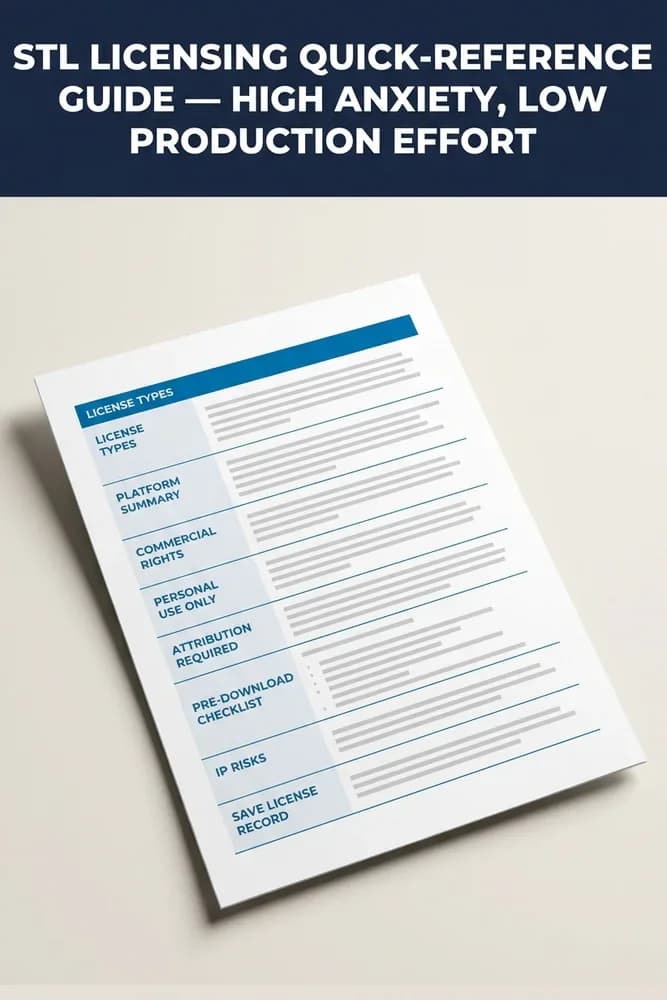
STL Licensing Quick-Reference Guide — high anxiety, low production effort
STL Licensing Quick-Reference Guide — high anxiety, low production effort