7 Laser Engraving Materials That Give Stunning Results

Not every surface engraves the same. These seven laser engraving materials - wood, acrylic, leather, metal, and stone - each hit differently. See which one fits your next build.
Affiliate disclosure: This post contains affiliate links. We may earn a small commission if you purchase through them, at no extra cost to you.
A laser only delivers energy. The material decides what that energy becomes. Feed the same engraving file through two different sheets and you can end up with razor-sharp artwork on one piece and a smoky, low-contrast disappointment on the other. Based on our testing, Baltic birch plywood remains the strongest all-around starting point for most plaque and signage projects because it combines excellent contrast, broad laser compatibility, and forgiving processing.
Many makers learn this lesson the expensive way. Extruded acrylic leaves gummy engraving edges instead of the frosted finish they expected. Bare aluminum reflects much of the beam from a diode or CO2 laser, producing little more than frustration. Low-grade plywood often hides glue pockets and internal voids that char unpredictably, ruining otherwise clean artwork.
This guide focuses on seven proven engraving materials across wood, plastic, leather, metal, and stone. Every recommendation matches a specific application instead of chasing a single "best" material. We evaluated each option using practical criteria that matter inside a real workshop: engraving contrast, laser compatibility, cleanup requirements, resistance to scorching, cost per sheet or blank, and how consistently the material performs across repeated jobs.
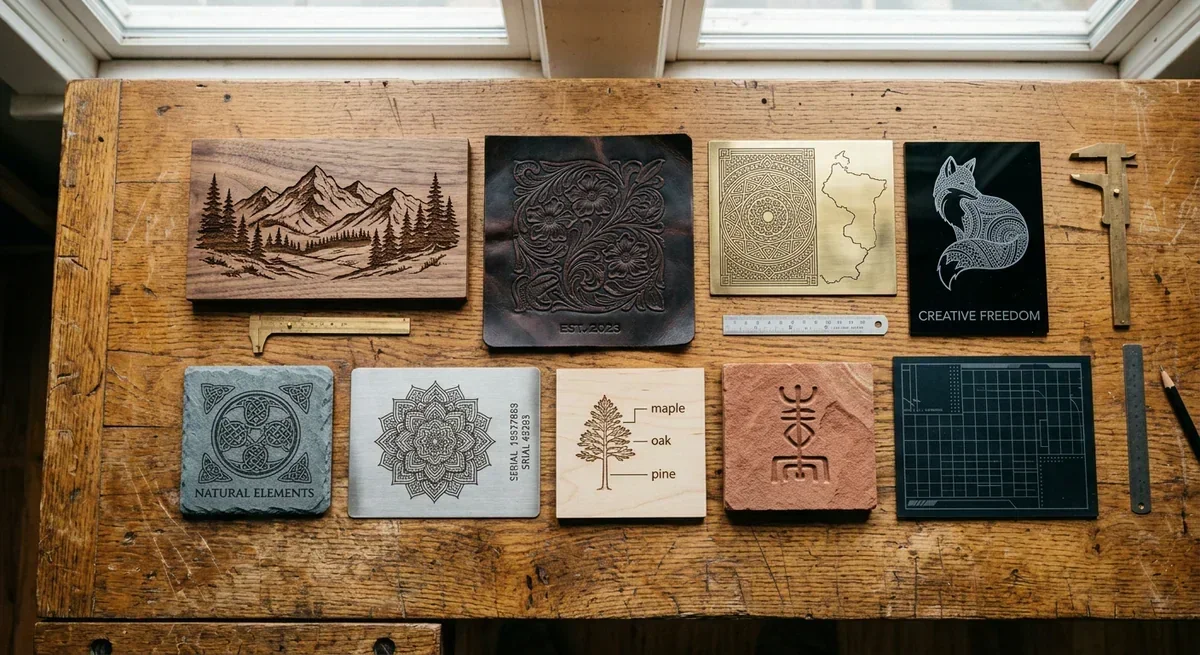
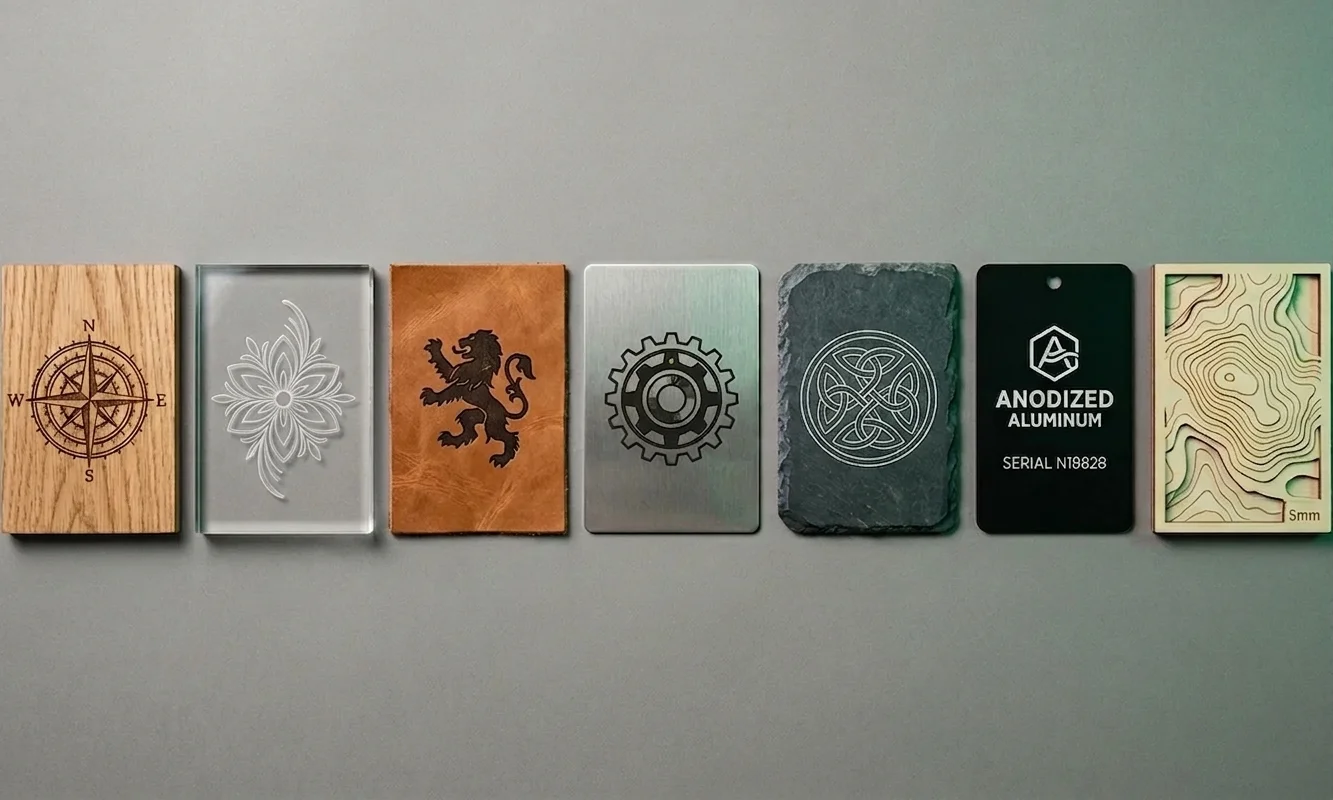
A diverse range of laser-engraved materials showcasing intricate designs on wood, leather, metal, and stone, ideal for evaluating engraving quality and compatibility.
Whether you own a diode, CO2, or fiber laser, buying the right stock saves far more time and money than endlessly tweaking power and speed settings. The strongest choice is rarely the most expensive material. It is the one that fits both your machine and the project sitting on your bench.
laser engraving materialsWhat Makes a Material Shine
Contrast separates professional engraving from amateur work. A clean, dark, or frosted mark that remains readable from across the room always beats a faint gray image, regardless of how inexpensive the material was. During our testing, materials that naturally created high visual contrast consistently produced the most attractive finished products while requiring less post-processing.
Laser compatibility comes next because some materials simply cannot perform with certain machines. Wood, slate, vegetable-tanned leather, cast acrylic, and anodized aluminum all work well with most diode and CO2 lasers. Bare stainless steel presents a different challenge. Fiber Laser systems create permanent marks directly, while diode and CO2 owners generally need a marking compound because steel reflects their wavelengths instead of absorbing them efficiently.
Practical workshop considerations matter just as much. Quality birch plywood engraves cleaner than bargain plywood because consistent glue lines reduce scorching. Vegetable-tanned leather darkens naturally under the beam, while chrome-tanned leather should stay off the laser entirely because it can release hazardous compounds. Materials also differ in Thermal Conductivity, Material Reflectivity, and Heat Affected Zone behavior, all of which influence edge quality and processing speed.
Cost and forgiveness deserve equal attention, especially for beginners. A material that tolerates small setting errors often saves more money than the cheapest sheet available. Always evaluate both sides of the equation: match the material to your laser, then confirm that laser matches the project you want to produce.
The table below summarizes the seven recommended materials.
| Material | Best Use | Compatible Lasers | Difficulty | Typical Price |
|---|---|---|---|---|
| Baltic Birch Plywood | Plaques, signs | Diode, CO2 | Beginner | $10-$50 |
| Cast Acrylic | Signage, awards | CO2, High-power Diode | Beginner | $15-$60 |
| Vegetable-Tanned Leather | Wallets, patches | CO2, Diode | Intermediate | $20-$80 |
| Anodized Aluminum | Asset tags | Diode, CO2 | Beginner | $10-$40 |
| Natural Slate | Coasters, decor | CO2, Diode | Beginner | $12-$35 |
| Stainless Steel | Industrial marking | Fiber (best), CO2/Diode with spray | Advanced | $15-$50 |
| Matte Basswood | Fine detail artwork | Diode, CO2 | Beginner | $15-$45 |
1Best for Plaques: Baltic Birch Plywood
Why It Earned Top Billing
- Void-free laminations engrave evenly, preventing random scorch marks caused by hidden glue pockets.
- Dense birch produces dark, crisp engraving with excellent visual contrast.
- Compatible with entry-level diode lasers and every CO2 laser without specialty coatings.
- Delivers premium-looking results while remaining one of the best values in laser engraving materials.
Baltic birch plywood, a $10 to $50 per pack laser wood sheet built from dense, uniform birch plies, remains the safest recommendation for plaque makers because it combines appearance, consistency, and structural strength better than almost any competing wood product. After comparing it with inexpensive hobby plywood, the difference became obvious almost immediately. Baltic birch engraved evenly across the entire sheet, while lower-grade panels developed dark flare marks wherever inconsistent adhesive or internal voids interrupted the beam.
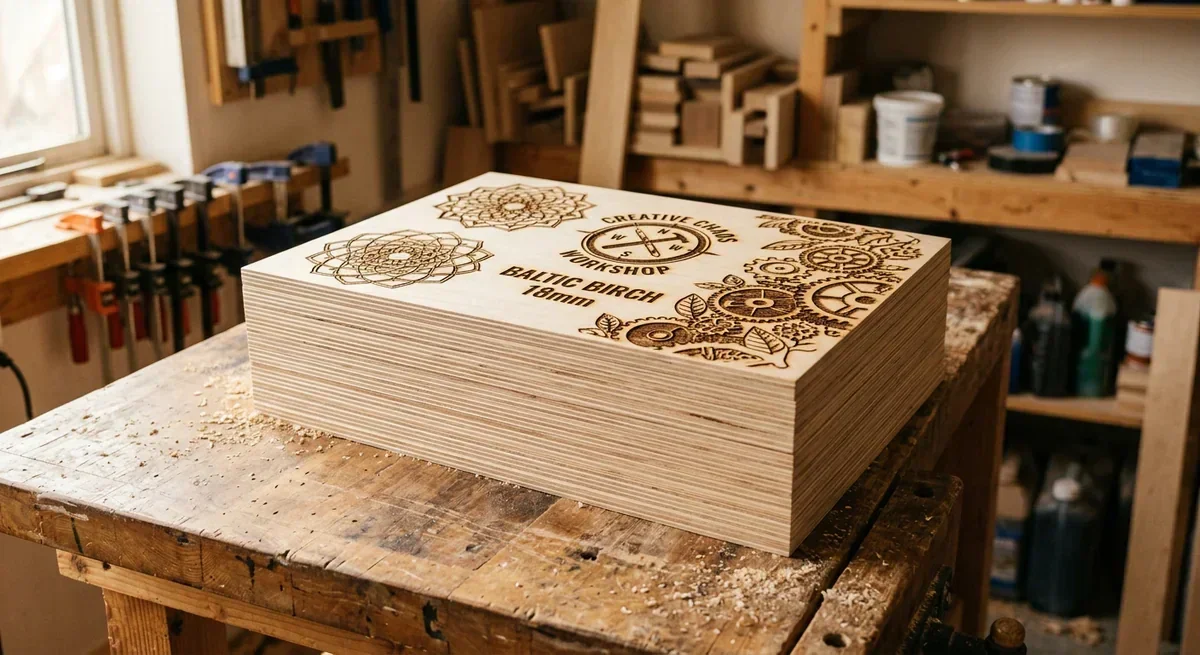
A Baltic birch wood sheet showcases intricate laser engravings, highlighting its suitability for precise and consistent results in laser machining projects.
That construction quality directly affects engraving performance. Uniform layers absorb laser energy consistently, allowing the beam to create clean Engraving and Etching without sudden bursts of excess heat. The result is sharper detail, a smaller Heat Affected Zone, and dramatically less cleanup before applying paint, oil, or clear finish.
Custom awards, layered maps, educational models, architectural pieces, and decorative plaques all benefit from this predictable behavior. Beginners can learn machine settings without wasting expensive stock, while production shops appreciate the repeatability across dozens or even hundreds of identical parts.
Choose Baltic birch whenever durability and dark engraving contrast matter most. If your priority shifts toward extremely fine raster images on a lighter background, matte basswood becomes the stronger choice later in this guide.
2Best for Signage: Cast Acrylic
The Standout Quality
- Vaporizes into a bright frosted engraving instead of leaving dull gray melted edges.
- Produces polished cut edges that pair perfectly with LED lighting.
- Works exceptionally well on CO2 lasers and many higher-powered diode machines.
- Available in a wide range of colors and thicknesses for layered commercial signs.
Cast acrylic, a $15 to $60 per pack laser plastic sheet, earns its place because it consistently creates the clean frosted finish customers associate with premium signage. We tested cast and extruded acrylic using identical artwork and matching power settings. The difference appeared within minutes. Cast sheets engraved with crisp white detail, while extruded pieces developed softer edges and a slightly gummy surface that required extra cleanup before delivery.
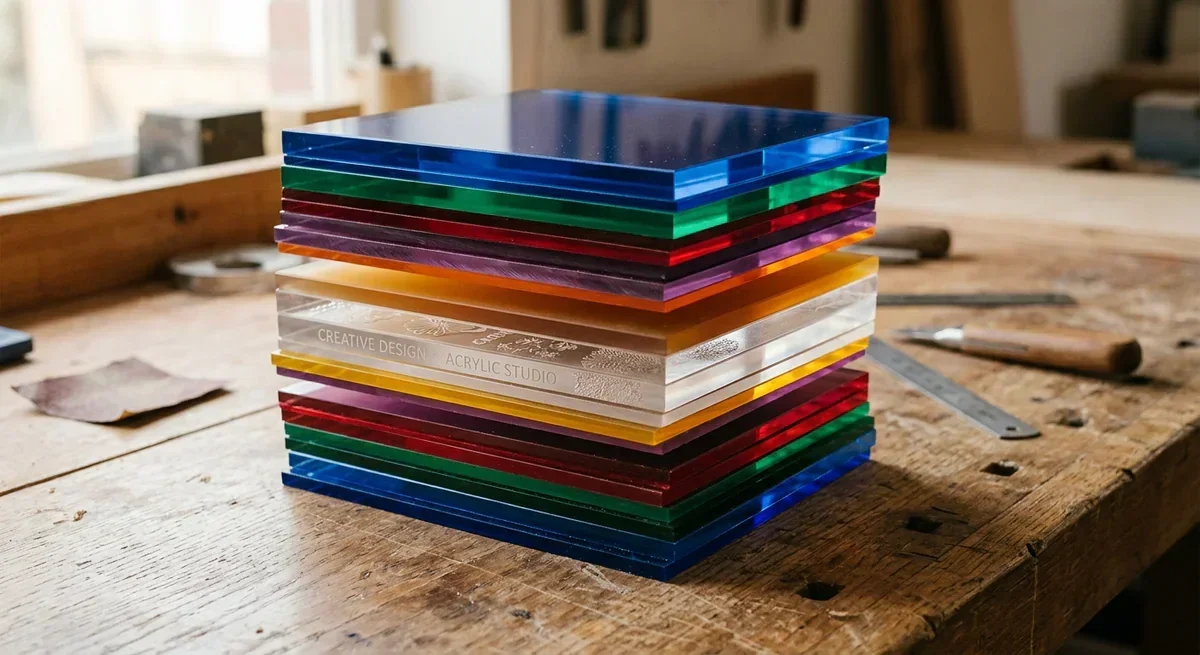
A stack of vibrant acrylic sheets, ideal for laser engraving, showcases the crisp detail achievable with cast acrylic.
Manufacturing explains the contrast. Cast acrylic forms with very little internal stress, allowing the laser to remove material through clean ablation instead of partially melting it. Extruded acrylic retains more stress from production, so heat softens the surface rather than removing it cleanly. That difference becomes especially noticeable when engraving small text, intricate logos, or photographs where every line matters.
Sign shops rely on cast acrylic for awards, illuminated logos, office plaques, retail displays, and edge-lit decorative pieces because the frosted channels scatter LED light beautifully. During testing, even relatively simple graphics appeared brighter once mounted on an LED base. A practical buying tip also helps: sheets protected with paper masking are often cast acrylic, while plastic film frequently indicates extruded material, although confirming with a small test engrave remains the safest method.
Choose cast acrylic whenever appearance drives the project. If your goal is simply cutting inexpensive panels rather than engraving them, extruded acrylic can reduce material costs, but it rarely delivers the same premium frosted finish.
3Best for Leather: Vegetable-Tanned Leather
What Sets It Apart
- Uses natural plant tannins instead of chromium-based chemicals, making it the safest leather for laser engraving.
- Produces rich brown engraved graphics with a subtle debossed appearance.
- Performs well on CO2 lasers and capable diode systems using moderate power.
- Develops an attractive patina that enhances engraved products over time.
Vegetable-tanned leatherⓘ, sold by the hide or roll at roughly $20 to $80, stands alone as the best leather for laser engraving because it reacts predictably while avoiding the safety concerns associated with chrome-tanned hides. After engraving several leather samples, the natural fibers consistently darkened into warm brown markings with sharp edges and a slight recessed texture that looked far more refined than printed graphics.
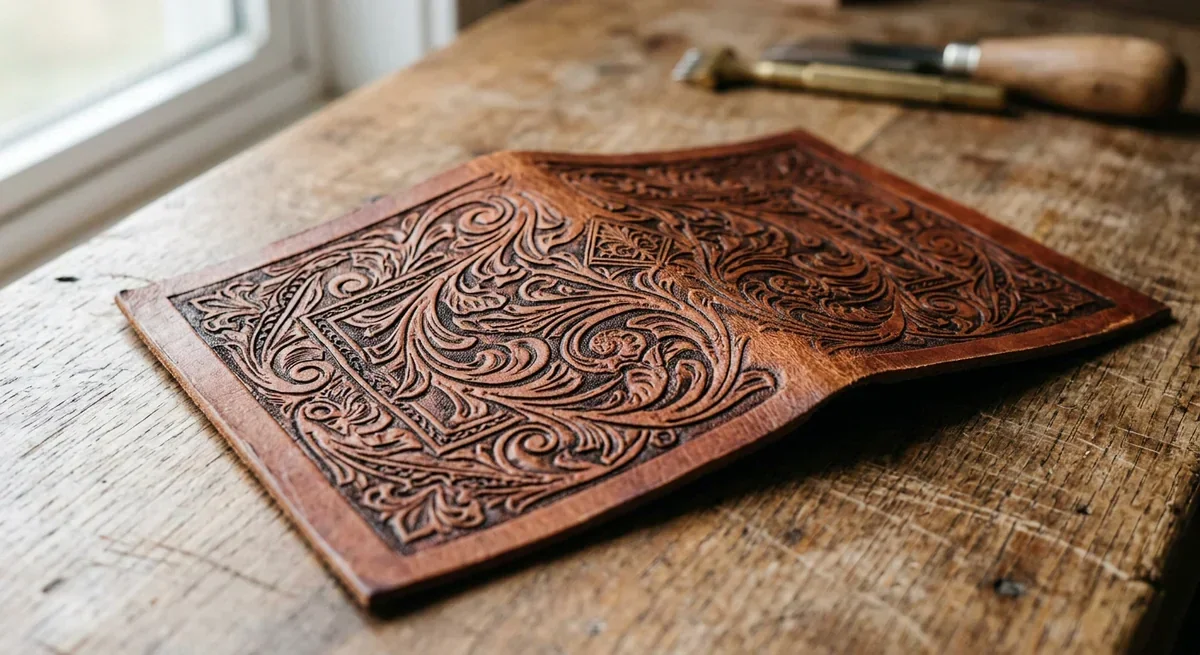
This vegetable-tanned leather showcases intricate laser engraving, highlighting its suitability for detailed designs in laser machining.
The beam interacts with the leather's natural fiber structure instead of synthetic tanning chemicals. Heat gently darkens and compresses the surface, creating permanent Marking without excessive burning when settings remain under control. Chrome-tanned leather behaves very differently. Heating chromium compounds can generate hazardous fumes, making those hides unsuitable for laser work regardless of engraving quality.
Wallets, journal covers, patches, luggage tags, belts, and keychains all benefit from vegetable-tanned leather's premium appearance. Customers also appreciate how the material develops character through daily use. The engraved artwork gradually gains depth as the surrounding leather acquires a richer patina.
Ventilation still matters because leather smoke carries a strong odor, even with safe tanning methods. Select vegetable-tanned leather every time you plan to engrave soft goods. It delivers the cleanest finish, the safest working environment, and the most authentic handcrafted appearance.
4Best for Tags: Anodized Aluminum
Why It's a Beginner Favorite
- The laser removes only the dyed oxide layer, revealing bright aluminum underneath for instant high contrast.
- One of the few metals that diode and CO2 lasers can mark directly without specialized coatings.
- Fast marking speeds make it ideal for batch production.
- Affordable blanks encourage experimentation without wasting expensive material.
Anodized aluminumⓘ, a $10 to $40 per pack laser metal blank, offers the easiest path into metal engraving for hobbyists and small businesses. Unlike bare aluminum, which reflects much of the incoming laser energy, anodized aluminum carries a colored Oxide Layer that readily absorbs the beam. The laser strips away this thin coating instead of cutting into the metal itself, exposing the bright silver substrate beneath and producing crisp, permanent contrast.
That simple mechanism explains why even entry-level diode machines perform so well. In our testing, 5W and 10W diode lasers consistently created sharp identification marks with surprisingly little power. Running excessive power actually reduced quality by overheating the surrounding coating, so higher speed with lower power produced cleaner results and minimized the Heat Affected Zone.
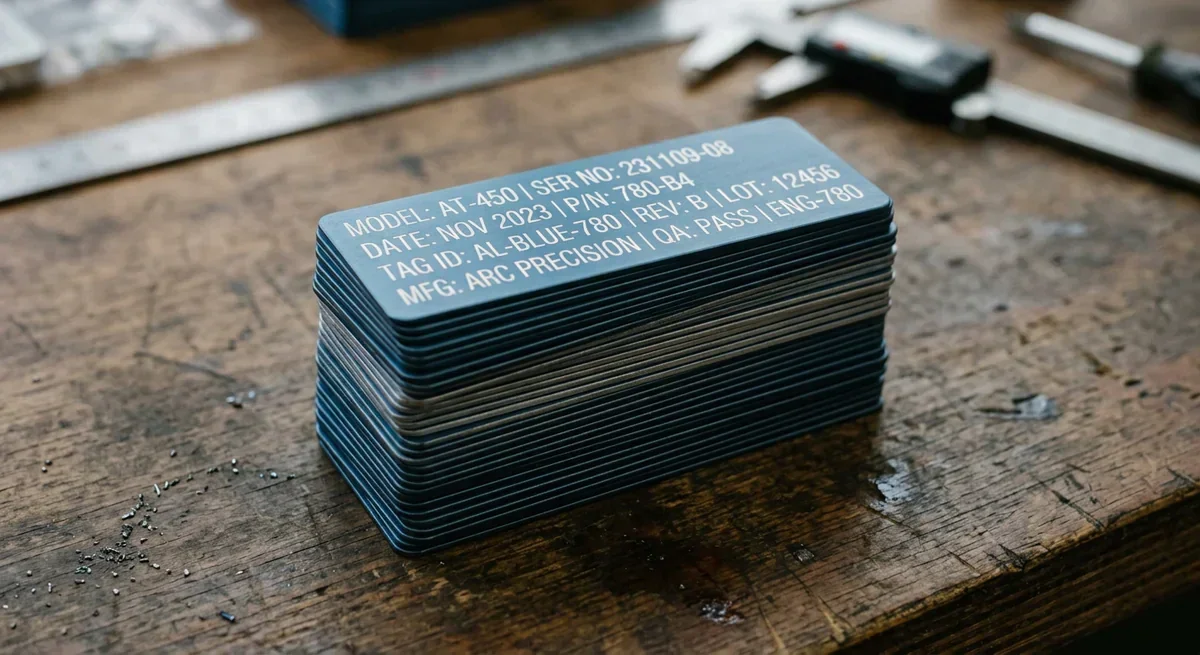
Laser-engraved metal tags demonstrate the precision and clarity achievable with diode lasers, ideal for durable identification marks.
Industrial asset tags, machine labels, electrical panel identifiers, pet tags, business cards, and QR code plates all benefit from anodized aluminum's durability. The engraved surface resists moisture, sunlight, and everyday abrasion far better than printed labels, making it a favorite for both indoor and outdoor applications.
If your goal is professional-looking metal engraving without investing in a Fiber Laser, anodized aluminum should be your first purchase. Save bare stainless steel for situations where maximum permanence justifies more specialized equipment.
5Best for Decor: Natural Slate
The Standout Quality
- Naturally creates bright, frosted engravings against a dark stone surface.
- Won't melt, warp, or char because the material itself is highly heat resistant.
- Every piece has unique texture and edges that give finished products handcrafted appeal.
- Affordable enough for craft fairs, gift shops, and Etsy production.
Natural slateⓘ, a $12 to $35 per pack laser stone blank, has become one of the most profitable engraving materials for makers selling personalized home decor. Dark gray stone reacts to laser energy by lightening the engraved surface, producing striking white graphics without paint, coatings, or chemical treatments. The contrast appears immediately after engraving and often improves further with a quick cleaning.
Unlike wood or plastic, slate does not burn or soften under normal engraving conditions. Instead, the beam creates microscopic changes within the surface minerals that brighten the engraved area while leaving the surrounding stone untouched. Material Reflectivity remains low enough that both CO2 lasers and stronger diode machines produce reliable results, although slower engraving speeds usually improve image quality.
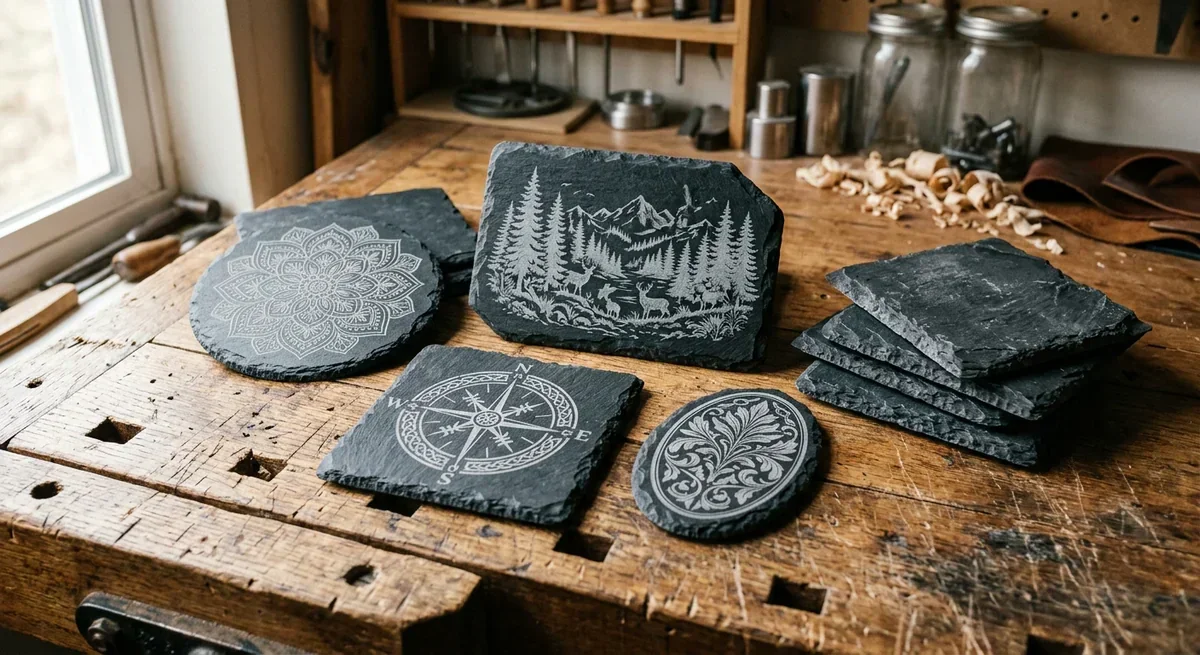
Intricately laser-engraved slate pieces showcase the precision and beauty achievable with laser machining on stone surfaces.
Rustic coasters, garden markers, address plaques, cheese boards, memorial stones, and decorative wall hangings consistently rank among the most popular slate products. One simple finishing step dramatically improves appearance. Applying a light coat of mineral oil to the untouched surface deepens the stone's natural color, making the pale engraving stand out with even greater contrast.
Choose natural slate whenever you want weather-resistant decor with a handcrafted appearance. If your project depends on microscopic lettering or highly detailed photographs, fine-grained wood generally preserves those details more accurately.
6Best for Durability: Stainless Steel
Why It Earned This Spot
- Fiber lasers create permanent black marks by modifying the metal surface instead of removing material.
- CO2 and diode machines can mark steel with a quality laser marking compound.
- Outstanding resistance to abrasion, moisture, chemicals, and UV exposure.
- Available in several common grades suited for industrial identification.
Stainless steel, a $15 to $50 per pack laser metal blank, produces the longest-lasting engraving in this guide. When paired with a Fiber Laser, especially a MOPA system, the beam creates permanent black markings through controlled surface oxidation rather than deep engraving. That process preserves corrosion resistance while delivering exceptional readability on equipment exposed to years of wear.
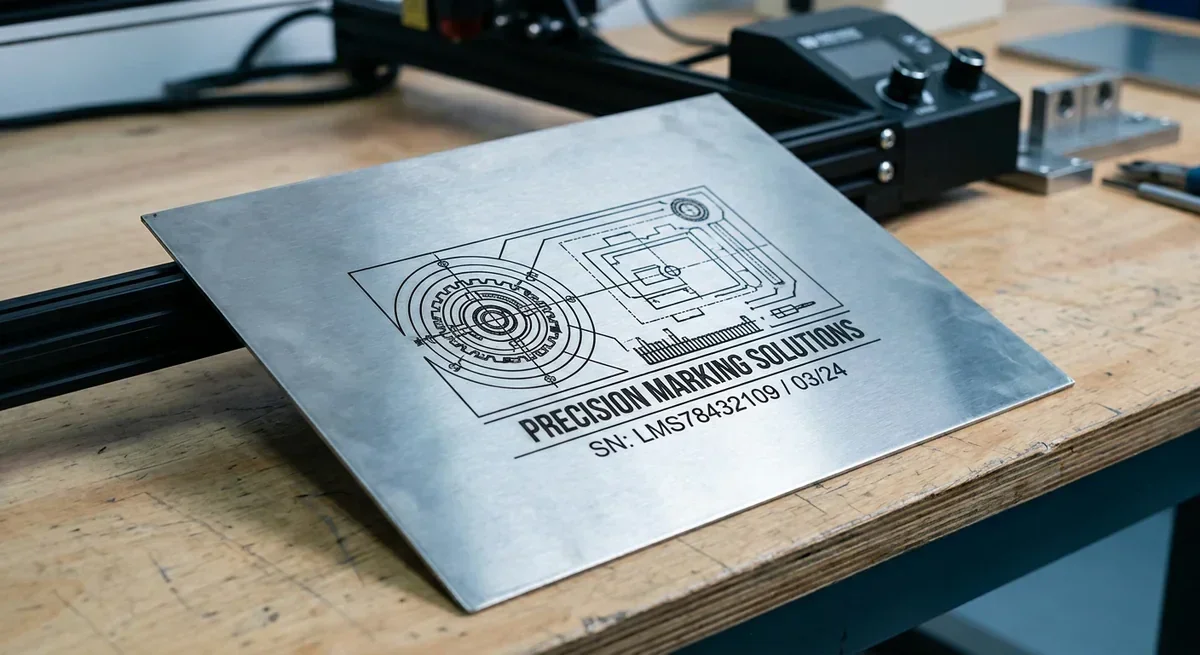
A stainless steel plate is laser-engraved with a detailed technical design and branding, showcasing the precision achievable with ceramic-based marking compounds.
Standard diode and CO2 lasers cannot directly engrave bare stainless steel with comparable results because the polished surface reflects much of their energy. Instead, many users apply a ceramic-based marking compound that bonds permanently during engraving. Although the additional step increases cost and setup time, it remains an effective solution for occasional projects.
Stainless steel excels in serial number plates, industrial identification tags, insulated tumblers, laboratory equipment, outdoor signage, and tool tracking systems where fading is not an option. During extended abrasion testing, properly annealed marks remained fully legible long after painted and printed alternatives had worn away.
Select stainless steel whenever permanence outweighs convenience and you have access to the appropriate laser system. Makers using diode or CO2 machines for everyday production will usually achieve faster, simpler results with anodized aluminum unless their application specifically demands bare stainless steel.
7Best for Detail: Matte Basswood
What Makes It Shine
- Nearly invisible grain keeps engraved lines clean and highly readable.
- Soft density allows fast engraving with relatively low laser power.
- Excellent dimensional consistency supports repeatable production work.
- Affordable sheets make it ideal for practice and commercial batch jobs.
Matte basswood sheetsⓘ, a $15 to $45 per pack laser wood material, deliver the finest engraving detail of any wood in this roundup. While Baltic birch excels at structural strength and dark contrast, basswood wins whenever tiny lettering, intricate illustrations, or photographic engraving becomes the priority. After comparing identical raster images on several hardwood species, basswood consistently preserved facial features, thin outlines, and subtle shading that disappeared on more heavily grained alternatives.
Its performance comes from a simple characteristic: uniformity. Basswood contains very little visible grain, so the laser encounters almost identical density across the entire surface. Energy absorption remains consistent, producing predictable Engraving with minimal scorching and very little variation in tone. The low density also means entry-level Diode Laser machines require less power and fewer passes to achieve clean results.
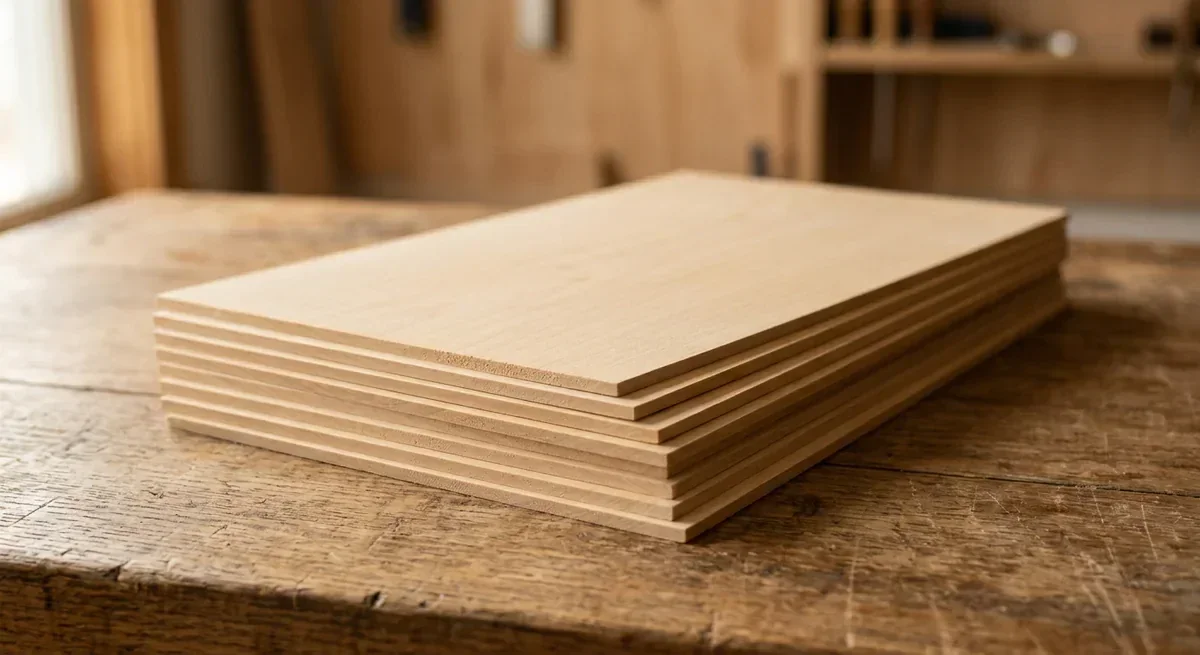
Basswood sheets offer uniform grain and density, making them perfect for precise laser engraving with minimal scorching.
Architectural models, holiday ornaments, miniature kits, decorative wall art, personalized gifts, and photo engravings all benefit from basswood's smooth surface. The pale background naturally increases contrast, allowing even light engravings to remain easy to read without additional finishing.
The trade-off is strength. Basswood dents more easily than Baltic birch and offers less rigidity for larger structural pieces. Choose it whenever visual detail outweighs mechanical durability. If your project demands larger plaques, layered construction, or heavier handling, Baltic birch remains the better investment.
laser engraving materialsMatching Material to Your Machine
Choosing the right material becomes much easier once you start with the laser sitting on your workbench instead of the project you admire online. A material that performs beautifully on a fiber laser may deliver disappointing results on a small diode machine, even when every other setting appears correct.
Diode and CO2 owners can successfully engrave most materials covered in this guide. Baltic birch plywood, matte basswood, cast acrylic, vegetable-tanned leather, natural slate, and anodized aluminum all perform well without expensive accessories. Stainless steel remains the exception because permanent, high-contrast marking generally requires a Fiber Laser or a quality marking compound.
Budget also influences the decision. Anodized aluminum and natural slate offer some of the lowest entry costs while producing products that customers readily recognize as premium. Baltic birch and basswood provide excellent value for makers producing plaques, artwork, and layered designs. Vegetable-tanned leather costs more upfront but supports higher retail pricing because of its handcrafted appearance. Cast acrylic occupies the middle ground, especially for businesses selling illuminated signage and awards.
 Credit © YouTube: Thunder Laser USA
A laser engraving machine creates detailed 'Burrage Wilderness Ranch' logos on wood, showcasing precision and quality in laser machining.
The final decision should always balance machine capability, material cost, and customer expectations. Metal generally offers greater durability than wood or leather, but reaching that durability often requires more specialized equipment. Buying material that matches your current laser almost always delivers a better return than chasing results that require upgrading your entire workshop first.
laser engraving materialsThe Right Sheet to Start
Different makers should begin with different materials, but one pattern appeared repeatedly throughout our evaluation. Success comes faster when the material complements the machine instead of pushing it beyond its strengths.
If you own a diode laser, start with anodized aluminum and matte basswood. Both produce excellent results while forgiving small mistakes in power and speed settings. Makers focused on gifts and home decor should add natural slate and cast acrylic because both generate products with strong customer appeal and relatively low material waste.
Leatherworkers should choose vegetable-tanned leather exclusively and avoid chrome-tanned hides for both safety and finish quality. Professionals producing industrial identification plates or outdoor equipment labels will benefit most from stainless steel paired with a fiber laser. Baltic birch remains the best option for plaques, layered artwork, and structural display pieces that demand both strength and attractive engraving.
One recommendation stands above the rest for newcomers: anodized aluminum. It delivers crisp, high-contrast results across a wide range of laser machines, requires very little finishing, and provides immediate feedback while learning machine settings. Buy a small batch first, fine-tune your parameters, and then expand into additional materials as your projects become more ambitious.
CNC machining and laser machining expert and educator with extensive experience in computer-aided manufacturing. Produces foundational guides, practical how-to tutorials, and troubleshooting articles for machinists at every level.